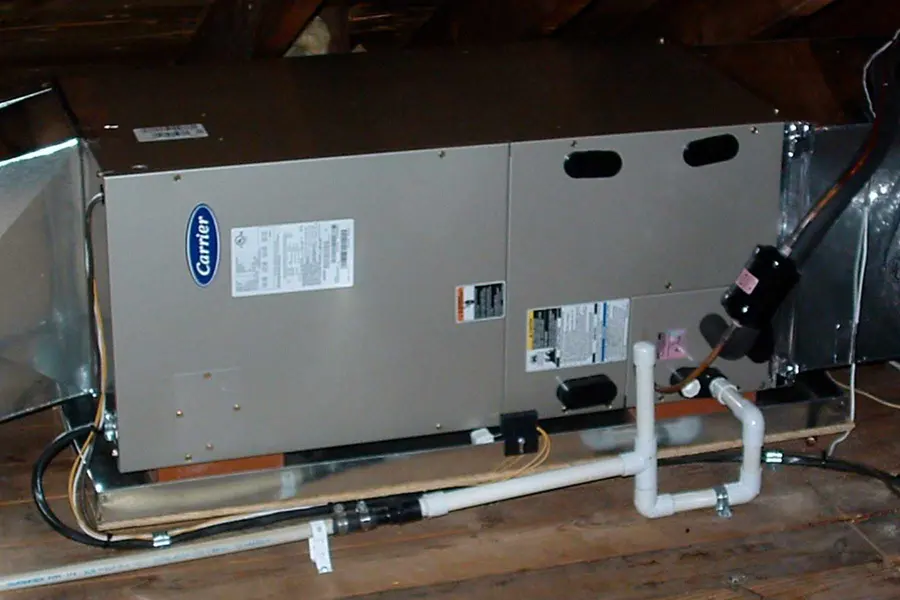
An air conditioner does more than cool a Glendora house. It also pulls moisture out of the air, and that water has to leave through a small drain that can clog.
Key takeaways
- Glendora summers are hot and dry, so attic air handlers run for months, and a condensate drain has a long season in which to clog.
- A brown ring on a ceiling can trace back to the air handler above it, and the stain can appear well after the overflow began.
- Switch the air conditioner off at the thermostat and the breaker so the unit stops making more water.
- Soaked attic insulation and sagging ceiling drywall are usually removed, while framing is dried in place.
- A heating and cooling technician can flush and test the drain before the next cooling season.
Why a summer of cooling can end in a stained ceiling
Cooling the air also strips moisture out of it. That moisture collects in a pan under the indoor coil and leaves through a condensate drain, usually a white plastic pipe that runs to a drain, a tailpipe or the outside of the house.
Glendora summers are hot and dry, and attic air handlers run for months. Over that time a drain can fill with slime and debris, and the first sign of trouble is often water on a ceiling.
A drain that clogs slowly gives little notice. Water drips into the pan for weeks, then the pan fills, and the overflow can run for days before anyone climbs into the attic.
AC condensate leak water damage usually starts this way.
Where the water goes in an attic
An attic air handler usually sits on a platform with a pan beneath it. If the drain clogs, the pan fills and spills onto the platform, the attic floor and the insulation.
From there, water follows the framing and soaks the drywall below. The ceiling stain can sit some distance from the air handler, because water travels along joists before it shows.
- Primary drain: the main outlet that carries water out of the pan.
- Overflow pan or secondary drain: catches spills when the primary clogs.
- Float switch: a sensor that shuts the unit off when water rises, where one is installed.
- Insulation and drywall: the first materials to absorb a spill.
Gravity drains, pumps and pans: where the system can fail
Attic condensate systems come in a few forms, and each has its own weak point. The common thread is that one small part carries all the water the system removes from the air.
Which of these an attic has is a question for the technician who services the unit. For a homeowner, the useful point is that every one of them depends on water leaving the pan faster than it comes in.
- Gravity drain: relies on a steady downhill slope, and a sag in the pipe can hold water and grow slime.
- Condensate pump: lifts water out of the pan, and a failed pump or a kinked discharge hose lets the pan fill.
- Fittings: a trap or cleanout, where one is installed, can fill with debris if it is never flushed.
- Secondary pan: a larger pan beneath the air handler that catches overflow, and it fills too once a leak runs long enough.
Signs the condensate drain has failed
Most of these signs appear below the attic, so a ceiling is often the first place a clogged drain is noticed.
- Brown ring: a brown or yellow stain on a ceiling, often near a hallway, closet or bedroom.
- Bubbling paint: paint that blisters or tape that peels along a ceiling seam.
- Sag: a ceiling that bulges, feels soft or holds water.
- Shutdowns: the air conditioner turning off on its own when a float switch trips.
- Outdoor drip: water dripping from a secondary drain outlet near the eave, which points to a clogged primary drain.
First steps when a ceiling stains or sags
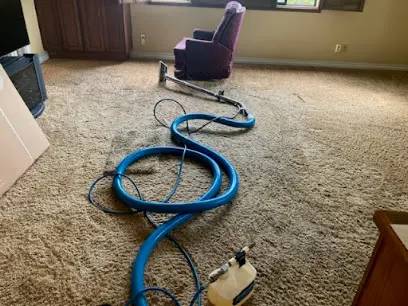
Water stored in drywall and insulation is heavy, and a sagging ceiling can give way all at once. Water extraction removes what reaches the floor, but the first steps are simple.
- Switch the air conditioner off at the thermostat and at the breaker.
- Keep people and pets out from under a bulging or dripping ceiling.
- Turn off the breaker for any room with a wet ceiling light or fan before using the switch.
- Move furniture and electronics out of the room, and set a bucket under any drip.
- Photograph the stain, the air handler and the drain outlets before anything changes.
- Leave a sagging ceiling alone unless a restoration technician is releasing the water in a controlled way.
What the restoration team removes and dries
A condensate overflow can look minor from below and be much larger above it. The restoration team starts in the attic and works down, because the water moved in that direction.
Ceiling leak water damage follows the attic work, because the drywall below has to be read, opened or replaced.
- Attic: wet insulation is removed, and the platform and framing are dried.
- Ceiling: drywall that sags, crumbles or reads wet inside is cut out so the cavity above can dry, while firm drywall that reads dry can often stay.
- Walls: moisture is checked where water ran down a wall cavity.
- Equipment: air movers and dehumidifiers run until readings match a dry reference.
- Records: photographs and readings are kept for the repair.
Keeping the drain clear before the next cooling season
Prevention is a short list. A heating and cooling technician can flush the drain, test the float switch and confirm that the pan is dry and level.
A stain after a long cooling season is a reminder that a small drain does a large job.
- Have the drain flushed and tested before the first hot spell.
- Check that the float switch shuts the unit off.
- Keep the filter clean so the coil stays clear.
- Look at the pan and the drain outlet whenever the attic is open for other work.
- Schedule a check after a long heat wave, when the unit has run hardest.
Questions
How can a homeowner tell condensate water from a roof leak?
Condensate leaks follow the air conditioner's schedule and appear while it cools, while roof leaks follow rain. A stain on a ceiling below the air handler points to condensate.
Is it safe to keep running the air conditioner after a leak?
No. A running unit keeps producing water. Switch it off until the drain is cleared and the damage is assessed.
Does wet attic insulation have to come out?
Usually yes. Soaked insulation holds water against the ceiling and does not dry well in place, so it is removed and replaced after the framing dries.
Why does a stain keep growing after the air conditioner is off?
Wet insulation and drywall keep releasing moisture, so a stain can spread for days until the materials are dried or removed.
How often should a condensate drain be cleared?
Once before each cooling season is a common routine, with extra attention where the air handler runs for long stretches.
Should a stained ceiling be painted over?
Not until the materials behind it read dry. Paint hides a wet ceiling and can trap moisture in the drywall and insulation above.