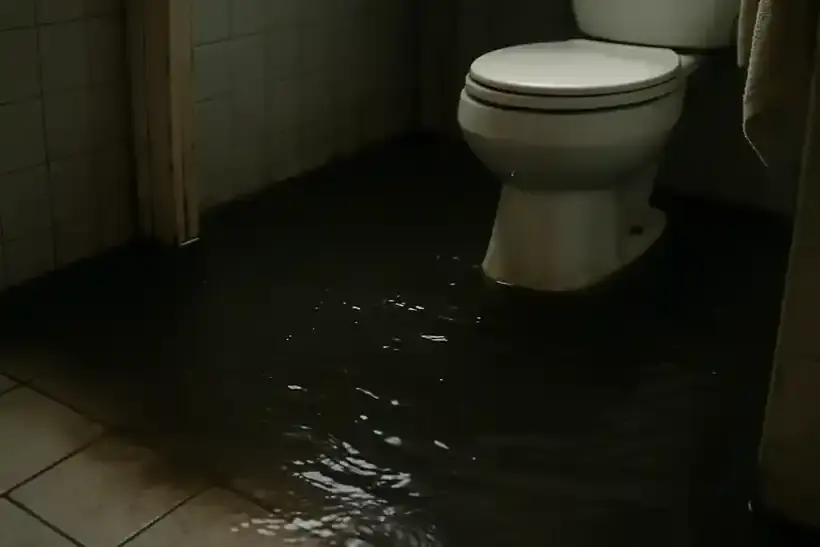
A sewage backup is Category 3 water the moment it leaves the drain, no matter how clear it looks. In Glendora it usually shows up at the lowest fixture in the house: a shower drain, a tub or a toilet on the ground floor of a slab home.
What causes sewage backups in Glendora
- Tree roots growing into older clay sewer laterals
- Grease, wipes and paper that block the main drain
- A sagging or cracked lateral under a 1950s or 1960s home
- A blocked city main that pushes water back up the lateral
A plumber clears or repairs the drain. The restoration team cleans up everything that came out of it.
How sewage backup cleanup is done
The crew sets containment with plastic sheeting and keeps the area under negative air with HEPA air scrubbers when the loss calls for it. Everyone in the work area wears gloves, boots, eye protection and a respirator. The crew cuts out and bags carpet, pad, upholstered items and drywall below the water mark, because porous materials touched by Category 3 water cannot be reliably cleaned.
The team then cleans hard surfaces and applies an EPA-registered antimicrobial for its labeled dwell time, and only after that does drying start. The OSHA flood page lists the hazards in contaminated water, and the California State Water Resources Control Board oversees sewer overflow rules in the state.
Protecting the rest of the house
Sewage contamination travels on shoes and in the air. The response team keeps foot traffic out of the work zone, seals doorways and cleans the path in and out. A final cleaning and a last round of readings close out the job, and the claim file records the category, what came out and why. Bathrooms that flood from the bowl alone are covered under toilet overflow cleanup.