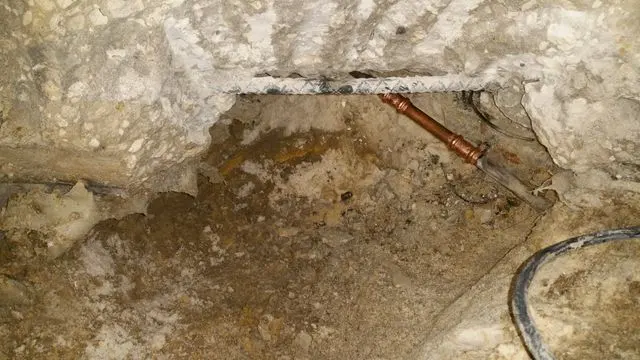
Most Glendora homes went up in the 1950s and 1960s, many of them on concrete slabs with copper or steel supply pipe running under or through the floor. When that pipe develops a pinhole or a joint fails, water spreads under the flooring for days before anyone sees it, so a slab leak loss is usually bigger than the wet spot suggests.
Signs of slab leak water damage in a Glendora home
A slab leak rarely shows up as a puddle. The local restoration pros look for the quieter signs first:
- A warm patch on tile or wood when a hot water pipe is leaking
- Carpet that feels damp along one wall or in a hallway
- Baseboards that swell, peel or darken at the bottom
- A water meter that keeps turning with every fixture off
- The sound of running water under the floor at night
Who does what on a slab leak
A plumber finds and repairs the leak, either by opening the slab at the break or by rerouting the pipe through the walls and attic. The restoration contractor who responds handles the water damage: it maps how far moisture spread under the flooring and into the walls, removes what cannot dry and dries the slab and the wall bottoms. The two jobs overlap, so it pays to call both early. The EPA WaterSense Fix a Leak Week page shows how to use the water meter to check for a hidden leak.
How a slab dries
Concrete gives up water slowly. The drying team pulls wet carpet pad and lifts tile or wood where the readings stay high, then runs LGR dehumidifiers with air movers aimed at the exposed slab. Dense areas can take a desiccant dehumidifier. The slab counts as dry when its readings come within 2 to 4 points of a dry reference elsewhere in the house, which usually takes longer than the drywall. The California Department of Insurance explains how homeowners claims work in the state, and hardwood floor drying covers wood floors over a wet slab.