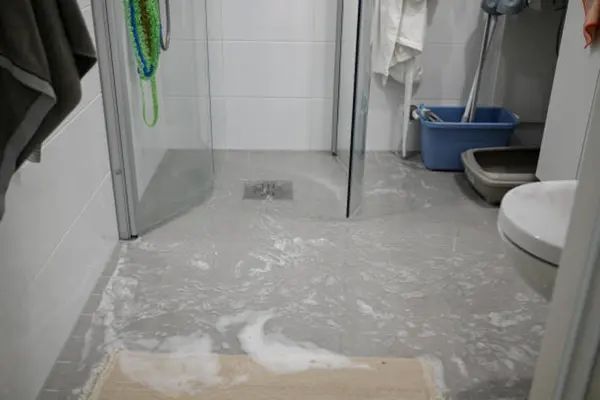
A toilet can flood a bathroom three different ways, and each one is handled differently. A split supply hose sprays clean water. A clogged bowl that overflows without waste is gray water. An overflow with waste, or a backup from the drain, is Category 3 and gets handled like sewage.
Why the category matters
The category decides what can stay. Tile and vinyl that took clean water usually dry in place, while bath mats, baseboards and the bottom of the drywall that took Category 3 water come out. The restoration crew sorts this out at the walkthrough, because the cleanup scope and the claim both depend on it.
Water under the toilet and the floor
- A failed wax ring lets water seep under the toilet into the subfloor
- Water runs under vinyl and tile and soaks the underlayment
- In two-story homes it shows up as a stain on the ceiling below
- On a slab, it spreads along the base of the walls
The water damage restoration experts pull the toilet when the subfloor reads wet, dry the floor from below where they can reach it and leave everything open until the readings meet the goal. The EPA WaterSense toilet pages cover running and leaking toilets, and the Fix a Leak Week page shows a simple dye test for a leaking flapper.
When the overflow is really a sewer problem
If the toilet backs up when the washer drains or the shower runs, the problem sits in the main drain or the sewer lateral, not the toilet. That is a sewage backup, and it needs a plumber and Category 3 cleanup.