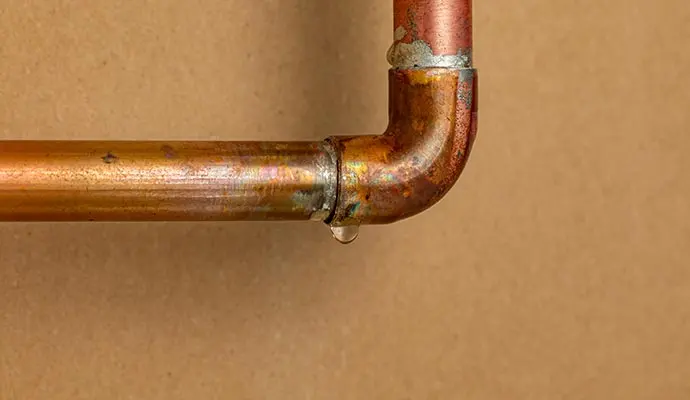
A supply pipe holds full water pressure all day, so a split or a failed fitting keeps pushing water until someone closes the valve. Inside a wall or ceiling, that water runs down the studs, soaks the insulation and spreads along the bottom plate before a stain ever shows.
Why pipes burst in Glendora homes
Hard freezes are rare here, so most failures come from age, pressure and the materials inside the walls. The Glendora water damage pros see the same causes again and again:
- Galvanized steel supply pipe in older homes that rusts from the inside
- Copper joints and fittings that wear through after decades
- Braided supply hoses at sinks and toilets that split
- High household water pressure with no working pressure regulator
- Nails or screws driven into a pipe during a remodel
Opening walls the right way after a burst pipe
The restoration team opens only what the readings call for. A flood cut along the lower drywall, a row of holes behind the baseboard or a ceiling panel under the break lets air reach the cavity. Wet insulation comes out, because it stays wet for days inside a closed wall. The Consumer Product Safety Commission posts recalls on plumbing parts and hoses, which is worth a check when a fitting fails early.
Drying the cavity, not just the surface
Paint and drywall can feel dry while the studs behind them stay wet. The drying team runs air movers into opened cavities, uses injection drying where walls stay closed and logs readings on the framing every day. Once the wood reads within 2 to 4 points of a dry reference, the cavity is ready to close. The EPA WaterSense leak checks help catch the next hidden leak early, and structural drying in Glendora covers the drying side in full.