Glendora · CAWater Damage Restoration
Emergency water removal

Water Extraction and Removal in Glendora, CA

24/7 water extraction in Glendora. The extraction crew pulls standing water out of carpet, pad, tile and slab floors with truck-mounted and portable units, so drying starts on a floor that is no longer holding water.

(888) 578-6508Standing water in Glendora? Call for extraction.
Extraction dispatch 24/7 Moisture mapped before setup Truck-mounted and portable units
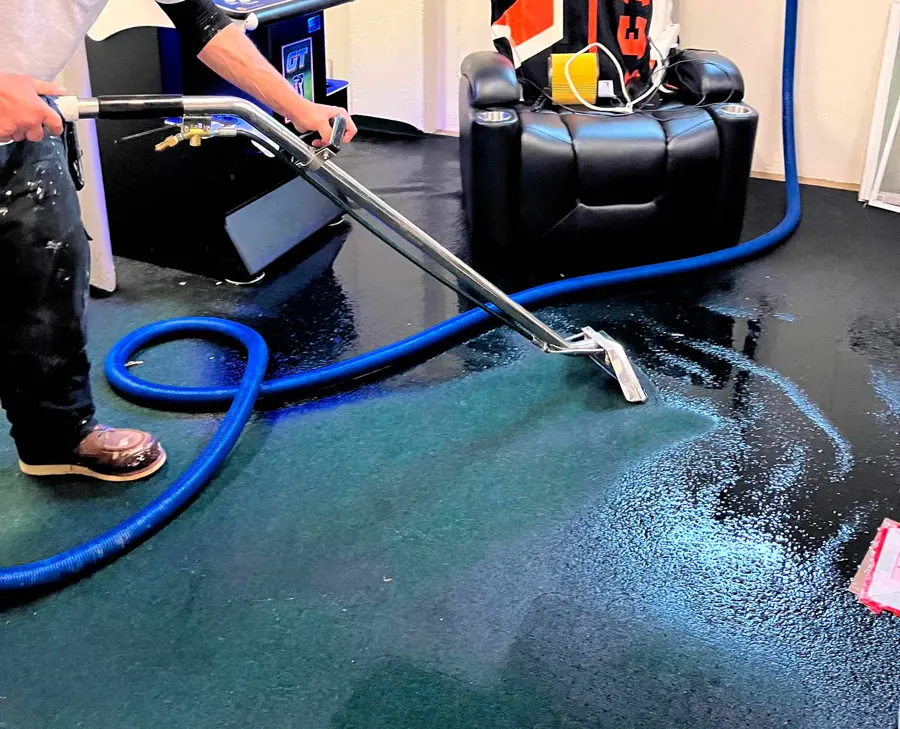
Extraction wand pulling water out of soaked carpet in a home theater room
Water categoryCategory 1 to 3, set at the source
Key equipmentTruck-mounted and portable extractors
Floors handledCarpet, pad, tile, wood, slab
Next stepStructural drying to IICRC S500
Right now

First steps for water extraction and removal in Glendora

  1. Stop the source

    Close the fixture valve or the main, and keep people and pets off wet carpet.

  2. Cut power to wet rooms

    Turn off breakers for those rooms only if the panel is dry and you are standing on a dry floor.

  3. Lift what can move

    Pick up rugs, cords and papers, and set foil or plastic under furniture legs that stay on wet carpet.

  4. Leave big losses to the truck

    A household wet vacuum barely dents a soaked pad; truck-mounted suction pulls far more water out.

How this loss behaves
Usual sourcesSupply pipes, water heaters, washers, slab leaks, storm runoff
Where water hidesUnder baseboards, carpet pad and cabinet toe kicks
What extraction savesCategory 1 carpet, cabinets and most of the drywall
What comes nextAir movers, LGR dehumidifiers and daily readings
Typical cost ranges

What does water extraction and removal cost in Glendora, CA?

In Glendora, CA, water extraction typically runs $300 to $2,500 for one to several rooms of clean water; extraction of Category 3 water or a whole floor runs higher and is usually billed together with the drying.

One room, clean water

$300 to $900
  • Truck-mounted or portable extraction
  • Carpet and pad pressed out
  • Moisture check of the room

Several rooms

$900 to $2,500
  • Hallways and adjoining rooms
  • Pad removed where needed
  • Moisture map for the drying plan

Category 3 or a full floor

$2,500 to $6,000+
  • Sewage or storm runoff
  • Carpet and pad removed
  • Antimicrobial before drying

Ranges are typical, not a quote. The water category, the square footage that got wet, the material class and how soon drying started move the number most. The Glendora water damage cost calculator gives a closer planning range.

The process

How water extraction and removal is handled in Glendora

Moisture gets mapped before any equipment goes down, and the equipment stays until the readings say dry, not until the room looks dry.

  1. Find the edge of the water

    The walkthrough tech maps how far water spread under flooring and baseboards with pinless meters.

  2. Extract wettest to driest

    The extraction crew starts where water stands and works outward so nothing gets pushed back.

  3. Press the carpet and pad

    Weighted tools squeeze water out of carpet and pad before the team decides what stays.

  4. Hand off to drying

    The drying team sets air movers and LGR dehumidifiers and logs readings every day.

Rapid local response

Restoration crews dispatch 24/7 across Glendora, because water keeps moving into subfloor, cabinets and drywall after dark.

IICRC S500 drying standard

The drying team works to IICRC S500: structural drying, not just surface drying, with readings logged daily.

Claim-ready documentation

A moisture map, psychrometric logs and timestamped photos build the file an adjuster reviews.

Foothill water know-how

Slab leaks, aging supply pipe, attic AC overflows and winter storm runoff are everyday work across the San Gabriel Valley foothills.

Extraction is the first and cheapest part of any dry-out. Every gallon the extraction crew pulls out as liquid is a gallon the dehumidifiers never have to pull out of the air, which is why a Glendora job starts with the wand, not the fans.

How water extraction works in a Glendora home

The tech who does the walkthrough checks the source first, then maps how far the water traveled under baseboards, cabinets and flooring. The extraction crew works from the wettest point outward and runs weighted tools over carpet so the pad gives up its water too.

  • Truck-mounted units for large losses, with hoses run in from the driveway
  • Portable extractors for condos, upper floors and tight hallways
  • Weighted extraction tools that press water out of carpet and pad
  • Squeegee wands and pumps for tile, vinyl plank and bare slab

Carpet, pad and hard floors after extraction

Clean water caught early often lets the carpet stay, with the pad pulled and replaced, because pad soaks like a sponge and rarely dries well in place. Tile and vinyl plank shed surface water fast, but water that slipped under them sits on the slab, so the drying team reads the floor before anything is kept or pulled.

  • Category 1 carpet: usually extracted and dried in place
  • Carpet pad: usually removed after extraction
  • Category 3 water: carpet and pad both come out
  • Hardwood: extracted, then dried with floor panel systems

When extraction needs more than a wand

Water that ran into a wall cavity, under cabinets or along a slab edge does not leave with surface extraction. The restoration team pulls baseboards, drills small holes behind them or cuts the lower drywall where the readings stay high, then hands the room over to structural drying. The EPA WaterSense Fix a Leak Week page shows how much water a hidden leak can waste, and Ready.gov flood safety advice explains when to stay out of a flooded room altogether.

Related

Related water damage services in Glendora

Planning tools for the next step

Coverage

Water extraction and removal across Glendora

Glendora Water Damage Restoration covers ZIP 91740 and 91741, from the Village and the Route 66 corridor up through Gordon Highlands and Easley Canyon, and from South Hills across to the streets along Big Dalton Wash and Lone Hill Avenue.

Nearby coverage reaches Azusa, Covina, San Dimas, Duarte, La Verne, Charter Oak, West Covina and Irwindale.

Glendora, CA service area

See every Glendora neighborhood and ZIP

Questions

Water Extraction and Removal questions in Glendora, CA

How much water can extraction remove?

Far more than a household wet vacuum. Truck-mounted units and weighted tools pull water out of carpet pad that a wand alone leaves behind, so most of the water in a clean-water loss leaves the house as liquid before the dehumidifiers start.

Can wet carpet be saved after extraction?

Often, when the water was clean and extraction started early. Carpet touched by Category 3 water, such as sewage or storm runoff, comes out, and carpet pad usually gets replaced either way.

Is extraction enough without drying equipment?

No. Extraction removes standing water, but drywall, framing and the slab still hold moisture. Air movers and dehumidifiers finish the job, and the readings decide when it is done.

Should a shop vacuum be used first?

For a small spill of clean water, a wet vacuum helps. For a large loss, or anything that may be contaminated, it is safer to stay off the floor and leave the water for truck-mounted extraction.

How long does water extraction take?

Most rooms take an hour or two of extraction, depending on how much water stands and what the floor is made of. The drying that follows takes days.

Does insurance pay for water extraction?

When the loss itself is covered, extraction is normally part of the mitigation scope the insurer reviews. Coverage depends on your policy, so check with your own insurer.

24/7 water emergencies

Standing water in a Glendora home? Call now.

Truck-mounted extraction, moisture mapping and structural drying, from the Village to the foothill streets.

(888) 578-6508Call for Glendora water extraction
Call (888) 578-6508 24/7