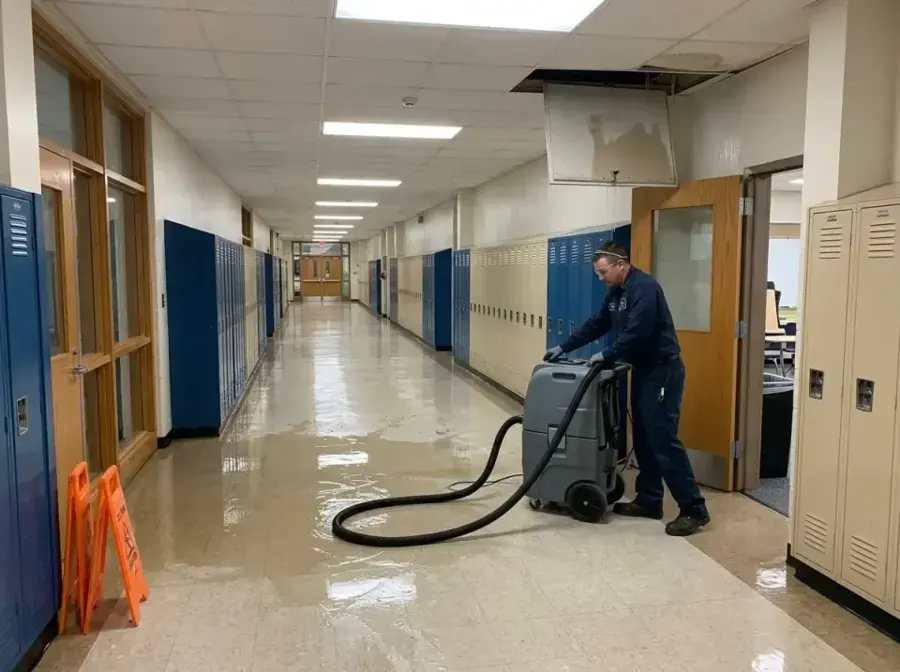
A water loss in a business costs twice: once in damage and again in lost days. Along Route 66, Foothill Boulevard and Lone Hill Avenue, Glendora's shopping centers, offices, medical suites and schools face the same leaks as homes at a larger scale, plus sprinkler pipe failures, roof drain backups and restroom overflows.
How commercial water damage restoration is run
- Extraction with truck-mounted and portable units sized to the floor area
- Containment that keeps the drying zone away from open areas
- Phased drying so parts of the building stay in use
- Desiccant and LGR dehumidification sized to large spaces
- Daily reports for the property manager and the insurer
The restoration contractor who responds sets the scope with the owner or manager on the first walkthrough: which areas close, which stay open, where equipment can run and how it gets power.
Common commercial losses in Glendora
Sprinkler pipe and roof drain failures can wet a large floor fast. Restroom overflows in shared buildings run into the suites next door, and slab leaks under older retail buildings spread under carpet tile. Schools and clinics need containment and careful handling, because people keep using the rest of the building. Structural drying covers how dense materials get dried.
Records for owners, managers and insurers
Each day the drying team logs moisture readings, psychrometric data and equipment counts by area, with photos. That file supports the insurance claim and answers tenant questions. The OSHA flood page covers worker safety in water-damaged buildings, and FEMA flood insurance explains flood coverage for commercial buildings.