Glendora · CAWater Damage Restoration
Wood floor drying

Hardwood Floor Water Damage in Glendora, CA

24/7 hardwood floor water damage restoration in Glendora. The drying team extracts the water, dries the boards and the slab or subfloor under them with floor panel systems and tracks every reading until the wood is back in range.

(888) 578-6508Wet or cupping wood floors in Glendora? Call now.
Floor panel drying systems Readings against dry wood Cupping tracked daily
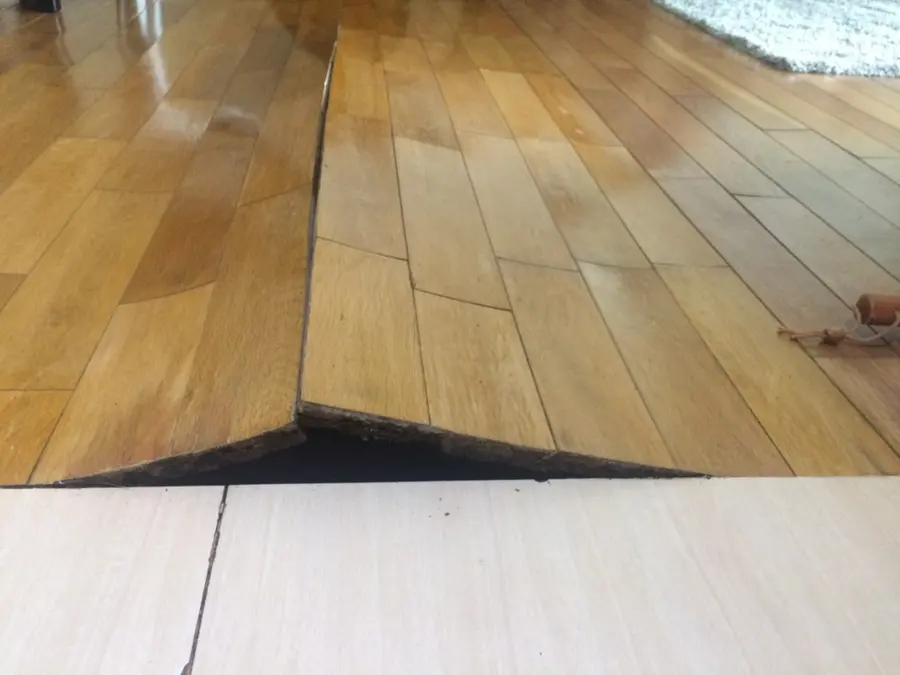
Hardwood floor boards buckled upward after soaking up water
Water categoryCategory 1 gives the best odds
Key equipmentFloor panels, LGR dehumidifiers
Dry referenceUnaffected wood in the same home
Typical timeOften one to two weeks
Right now

First steps for hardwood floor water damage in Glendora

  1. Stop the water

    Close the valve or the main and wipe up surface water right away.

  2. Get furniture off the floor

    Lift rugs and move furniture so the wet boards can breathe.

  3. Do not heat or sand

    Space heaters and sanding a wet floor cause crowning and cracks, so let the drying equipment do the work.

  4. Photograph the boards

    Photograph cupping and stains with an everyday object in the shot for scale.

How this loss behaves
Usual sourcesAppliance leaks, slab leaks, pipe failures
First signCupped boards and gaps along the seams
Best oddsSolid wood, clean water, drying started early
Often replacedLaminate and thin engineered veneers
Typical cost ranges

What does hardwood floor water damage cost in Glendora, CA?

In Glendora, CA, hardwood floor water damage restoration typically runs $1,000 to $7,500 for drying one room up to several, depending on the floor type and how wet the slab or subfloor got; floors replaced across several rooms reach $15,000 or more.

One room, drying in place

$1,000 to $3,000
  • Extraction and floor panels
  • Slab or subfloor readings
  • Daily logs

Several rooms

$3,000 to $7,500
  • Multiple floor panel setups
  • LGR dehumidifiers
  • Baseboards removed

Removal and slab drying

$7,500 to $15,000+
  • Buckled or Category 3 floors removed
  • Slab dried before new flooring
  • Full documentation

Ranges are typical, not a quote. The water category, the square footage that got wet, the material class and how soon drying started move the number most. The Glendora water damage cost calculator gives a closer planning range.

The process

How hardwood floor water damage is handled in Glendora

Moisture gets mapped before any equipment goes down, and the equipment stays until the readings say dry, not until the room looks dry.

  1. Read the floor

    The walkthrough tech takes readings on the wet boards and on unaffected wood for a dry reference.

  2. Extract and set panels

    The extraction crew pulls surface water, then the drying team sets floor panels over the wettest boards.

  3. Dry the air and the slab

    LGR dehumidifiers dry the room while readings track the boards and the slab or subfloor.

  4. Decide with the data

    Daily readings show whether the boards come back or need replacement.

Rapid local response

Restoration crews dispatch 24/7 across Glendora, because water keeps moving into subfloor, cabinets and drywall after dark.

IICRC S500 drying standard

The drying team works to IICRC S500: structural drying, not just surface drying, with readings logged daily.

Claim-ready documentation

A moisture map, psychrometric logs and timestamped photos build the file an adjuster reviews.

Foothill water know-how

Slab leaks, aging supply pipe, attic AC overflows and winter storm runoff are everyday work across the San Gabriel Valley foothills.

Wood floors take water in through the seams and the bottom of the boards. As the bottoms swell faster than the tops, the edges rise and the boards cup. Caught early with clean water, many solid and engineered floors dry back down instead of being torn out.

Cupping, crowning and buckling

  • Cupping: board edges higher than the centers, from moisture underneath
  • Crowning: centers higher than the edges, often from sanding a floor that was still wet
  • Buckling: boards lifting off the slab or subfloor, the worst case
  • Gaps and dark stains: signs of a slow, long-running leak

How hardwood floors are dried

The extraction crew pulls surface water first, then the drying team sets floor panel systems that draw water out through the boards while dehumidifiers dry the air. On Glendora slab homes, the concrete under a glue-down or floating floor holds water too, so the readings cover both. The wood counts as dry when it reads within range of unaffected wood elsewhere in the house.

Floors that took Category 3 water, or that buckled badly, usually come out. Sanding and refinishing wait until the wood and the slab are fully dry, often weeks later. Water under the boards from a kitchen or laundry is covered under appliance leak water damage.

Saving the floor or replacing it

Engineered floors with thin veneers and laminate with a fiberboard core swell and rarely recover. Solid oak with clean water and early drying has the best odds. The restoration team records board readings and photos every day, which matters when the claim weighs drying against replacement. The California Department of Insurance explains how claims are reviewed, and the EPA indoor air quality pages explain why moisture trapped under floors matters.

Related

Related water damage services in Glendora

Planning tools for the next step

Coverage

Hardwood floor water damage across Glendora

Glendora Water Damage Restoration covers ZIP 91740 and 91741, from the Village and the Route 66 corridor up through Gordon Highlands and Easley Canyon, and from South Hills across to the streets along Big Dalton Wash and Lone Hill Avenue.

Nearby coverage reaches Azusa, Covina, San Dimas, Duarte, La Verne, Charter Oak, West Covina and Irwindale.

Glendora, CA service area

See every Glendora neighborhood and ZIP

Questions

Hardwood Floor Water Damage questions in Glendora, CA

Can water damaged hardwood floors be saved?

Often, when the water was clean and drying started quickly. Solid wood has the best odds; laminate and thin engineered floors usually get replaced.

How long does it take to dry a hardwood floor?

Often one to two weeks, and longer when the slab or the subfloor underneath is wet.

Will cupped boards flatten again?

Many do as they dry. Boards that stay cupped after drying may need sanding once they read dry.

Why not sand the floor right away?

Sanding a wet, cupped floor flattens the edges; when the boards dry, the centers end up higher and the floor crowns.

Does insurance pay to dry or replace the floor?

When the loss is covered, the insurer weighs the drying records against replacement. Coverage depends on your policy, so check with your own insurer.

Does water under the floor matter on a slab?

Yes. A concrete slab under a glue-down or floating floor holds water and can push it back into new flooring if it is not dried.

24/7 water emergencies

Water on a Glendora hardwood floor? Call now.

Floor panel drying, slab readings and daily records that support the claim, any hour.

(888) 578-6508Get Glendora hardwood drying set up
Call (888) 578-6508 24/7