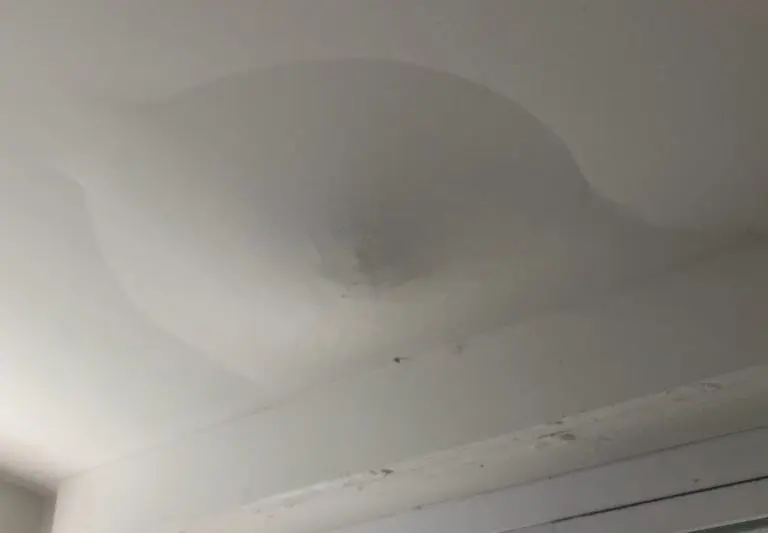
A ceiling leak with a dry roof above it starts inside the house: a toilet or tub overflow upstairs, a failed supply pipe in a joist bay, a shower pan or an appliance on the floor above. In Glendora's two-story homes and condos, the leak often runs for hours before the stain shows below.
Electrical safety with a wet ceiling
Water does not mix with ceiling lights, fans and smoke detector wiring. Before anyone opens the ceiling, the restoration crew checks for live circuits in the wet area and works with the breakers off. A ceiling that bulges is holding water and can come down without warning, so the room stays clear until the crew drains it.
Opening and drying a wet ceiling
- The crew drains a bulging ceiling at its low point into a container
- Drywall that sagged, softened or lost its tape comes out
- The team checks the insulation in the joist bay and removes it if wet
- Air movers and dehumidifiers dry the joists and the subfloor above
- Readings on the framing decide when the ceiling can close
Drywall that stayed flat and firm can often dry in place with air directed into the bay. Textured ceilings installed before the 1980s may contain asbestos, so the crew has older ceilings tested before cutting them; the EPA asbestos pages explain why.
Ceiling leak or roof leak?
Water through the ceiling during a storm points to the roof, which roof leak water damage covers. Water through the ceiling on a dry day points to plumbing or an appliance above, and the source has to be stopped before drying can finish. The Consumer Product Safety Commission posts recalls on supply hoses and appliances that fail early.