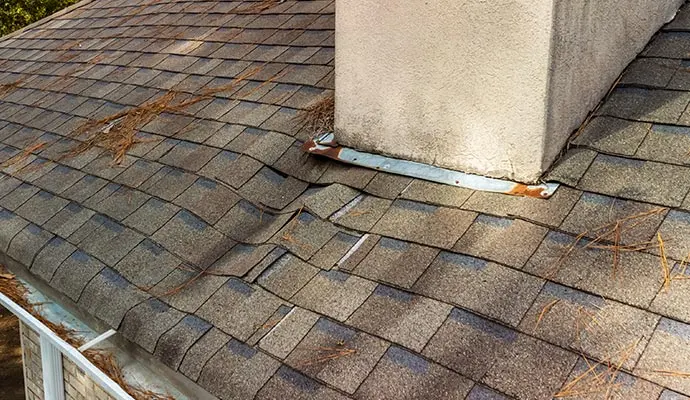
Glendora roofs go months without rain, then take most of the year's water in a few winter storms. Cracked tiles, worn underlayment, lifted shingles and gaps in flashing that held up all summer show themselves in the first heavy storm, usually as a stain on a ceiling well away from the actual roof opening.
Where roof leaks start on Glendora homes
- Cracked or slipped clay and concrete tiles over worn underlayment
- Flashing gaps at chimneys, skylights and wall joints
- Flat and low-slope roofs where water ponds after a storm
- Roof vents and pipe jacks with dried-out seals
- Gutters packed with leaves that push water under the roof edge
How roof leak water damage is handled inside
The roofer stops the water on the roof. Inside, the water damage restoration experts follow the water: from the decking into the attic insulation, down onto the ceiling drywall and into the walls. The crew bags soaked insulation, drains a bulging ceiling at its low point and gives the attic and the rooms below their own drying setups.
Rain that comes straight through a roof usually starts as clean or gray water, but water that sits in insulation for days or runs through a dusty attic gets worse. The California Department of Insurance explains how storm and roof claims work in the state. Leaks that start inside the house, like an upstairs bath, fall under ceiling leak water damage.
Drying the attic and the ceiling
Attic framing and roof decking dry with air movement and dehumidification aimed at the wet bays. Ceiling drywall that held water often sags or loses its bond and gets replaced. The drying team logs readings on the framing and the ceiling every day, and the Department of Energy Energy Saver program covers how attic insulation affects a home once it goes back in.