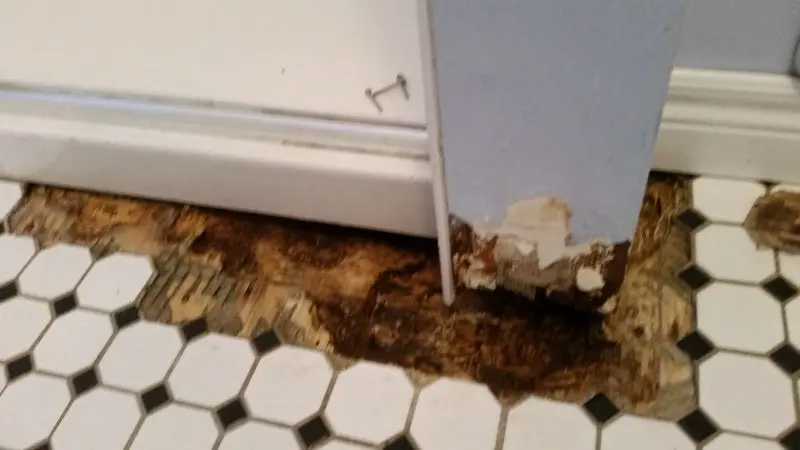
Shower and tub leaks are slow and hidden. A shower pan that cracked, a tub drain gasket that dried out or a valve leaking inside the wall can drip with every shower for months. The first sign is often loose tile, a soft spot at the threshold, peeling baseboard in the next room or a stain on the ceiling below.
Signs of a shower or tub leak
- Grout that stays dark long after a shower
- Loose or cracked tile near the drain or the threshold
- A soft or sinking floor at the shower entry
- Swollen baseboard or flooring in the hallway outside
- A ceiling stain below an upstairs bathroom
Opening the area and drying it
The tech who does the walkthrough maps moisture with pinless meters and thermal imaging around the shower, the tub and the rooms next to them. The mitigation team removes rotted subfloor and wet drywall, then the drying team dries the framing with air movers and dehumidifiers until the readings meet the goal. A plumber or a tile contractor repairs the pan, the drain or the valve. Ceiling leak water damage covers water that reached the floor below.
Why older Glendora bathrooms leak
Many bathrooms here date from the 1950s through the 1970s, when California showers were often built over hot-mopped tar or metal pans that crack and wear out with age. The EPA WaterSense Fix a Leak Week page explains how to check fixtures for leaks, and the EPA indoor air quality pages explain why hidden moisture matters indoors.