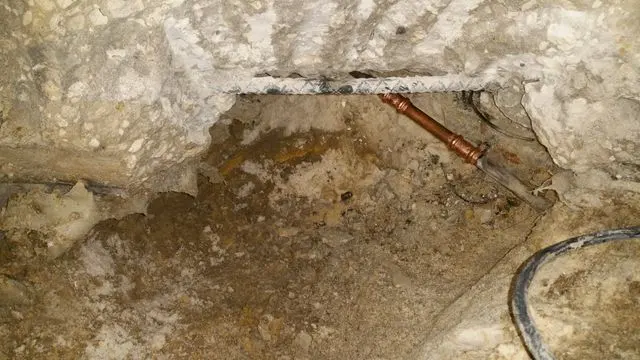
Water rarely announces a slab leak in a Glendora home. A pipe under a concrete floor can leak for weeks before a warm spot, a swollen baseboard or a water bill points to it.
Key takeaways
- A slab leak is a leak in a supply pipe that runs under or through a concrete floor, so the first signs appear on the surface.
- Glendora's median home was built about 1964, and homes from 1950 to 1969 are more than half the housing stock.
- A water meter that keeps moving with every fixture and appliance off points to a leak somewhere on the property.
- The plumber finds and repairs the pipe, and the restoration team dries the slab, the flooring and the wall bottoms. The two jobs overlap.
- Photographs, meter readings and the plumber's report make up the record for any claim.
Why slab leaks turn up in older Glendora homes
Glendora was a citrus town until the late 1950s, and the housing that followed went up in the 1950s and 1960s. The median home was built about 1964, and homes from 1950 to 1969 are more than half of the stock.
Many of those post war homes sit on concrete slabs, with the supply pipe running under the floor. After decades in service, a joint or a pinhole in that pipe can start leaking where nobody can see it, and the result is slab leak water damage.
The Village also has homes from the early 1900s, so the age and construction of a house are the first things to establish when a floor turns up wet.
Signs of a slab leak on the floor and walls
A slab leak seldom makes a puddle. The water spreads under the flooring and into the bottoms of the walls, so the signs are quiet and easy to blame on something else.
- Warm patch: a spot on tile, wood or carpet that stays warm when no hot water is running.
- Damp carpet: a musty smell or a cool, wet feel along one wall or down a hallway.
- Swollen baseboards: trim that darkens, peels or swells at the bottom edge.
- Lifting floors: tile, grout or wood joints that crack or rise in one area.
- Running water sounds: a faint hiss or trickle when every tap is off.
Hot water or cold water: reading the clues
Most homes have a hot supply pipe and a cold one, and a slab can hide a leak in either. The clues differ, which helps a plumber decide where to start.
- A warm or hot spot on the floor points to the hot water pipe.
- A water heater that seems to run all the time can mean hot water is escaping somewhere.
- Damp flooring with no warm spot is more likely a cold water leak or a drain problem.
- A meter that moves with the water heater switched off still counts as a leak, whichever pipe it is.
A meter test before anyone is called
The water meter gives the quickest answer. The test takes no tools and separates a leak in the pipes from normal use.
The result is worth passing to the plumber, who can narrow the search with listening gear, a pressure test or a thermal camera.
- Turn off every faucet, the ice maker and the irrigation system, and make sure no appliance is mid cycle.
- Read the meter dial or the small low flow indicator, and write down the number and the time.
- Wait through a quiet stretch with no water use, such as overnight, then read it again.
- If the number moved or the indicator keeps turning, close the main valve at the house and check a third time.
- A dial that stops once the main valve is closed means the leak is on the house side of that valve.
Who fixes the pipe and who dries the floor
A slab leak needs two kinds of work, and they overlap. The plumber locates the break and chooses the repair, and the restoration team deals with the water the leak has already put into the house.
A call to a restoration team can start moisture mapping while the plumber is still searching for the break, and structural drying begins once the readings show where the water went.
What the plumber handles
Two repair paths are common. Opening the slab at the break keeps the pipe where it was but means cutting concrete and replacing the flooring over the cut.
Rerouting runs new pipe through the walls or the attic, which leaves the slab alone but opens drywall.
- Locating the leak with listening gear, a pressure test or a thermal camera.
- Repairing the pipe or rerouting it through the walls or the attic.
- Testing the repair before any flooring goes back.
What the restoration team handles
- Mapping moisture across the slab, the flooring and the bottoms of the walls.
- Lifting wet carpet pad, tack strip and any flooring that traps water.
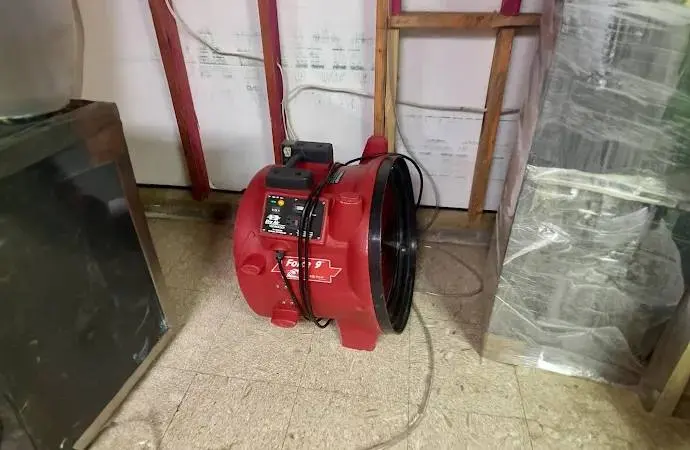
- Running dehumidifiers and air movers, with readings logged each visit.
- Recording the loss with photographs and a reading log.
Why a slab dries slowly
Concrete holds water like a dense sponge and gives it up slowly. Flooring on top of it traps whatever has soaked in, so the surface can look dry long before the slab is.
Drying follows the IICRC S500 standard. Readings are compared with a dry reference elsewhere in the house, and the equipment stays until the numbers match.
A slab can also hide wet spots under flooring. A thermal camera and a moisture meter are used together, one to find where heat and water differ and the other to put a number on how wet the material is.
Wood needs its own plan. Boards over a wet slab can cup and crown, and hardwood floor water damage explains when boards can be dried in place and when they are lifted.
What to photograph and keep
A slab leak loss can involve a plumber, a restoration team and a claim, so a simple record saves time later.
- Photographs of every wet or stained area before anything is moved or removed.
- The meter reading, with the date and time, before and after the main valve was closed.
- The plumber's report showing where the pipe failed and how it was repaired.
- A copy of the moisture readings from each drying visit.
- A list of damaged flooring, baseboards and belongings.
Questions
Can the floor be dried before the plumber repairs the pipe?
Standing water can be extracted and wet materials removed right away, but full drying waits for the repair. Until the pipe is fixed, it keeps feeding water to the slab.
How can a homeowner tell a hot water leak from a cold water leak?
A hot water leak often leaves a warm spot on the floor. A cold water leak shows up as dampness or a moving meter with no warm patch, and the meter test works for both.
Does the whole floor have to come up?
Usually not. Moisture readings show how far the water traveled, and only flooring that holds water or stays wet is lifted.
Why do homes from the 1950s and 1960s come up so often with slab leaks in Glendora?
More than half of the city's homes date from 1950 to 1969, and many sit on post war slabs with supply pipe underneath. Age gives a pipe time to wear, and the slab hides the problem.
Is a high water bill enough to prove a slab leak?
No. A rising bill is a prompt to run the meter test, because irrigation, a running toilet or a dripping fixture can raise a bill too.