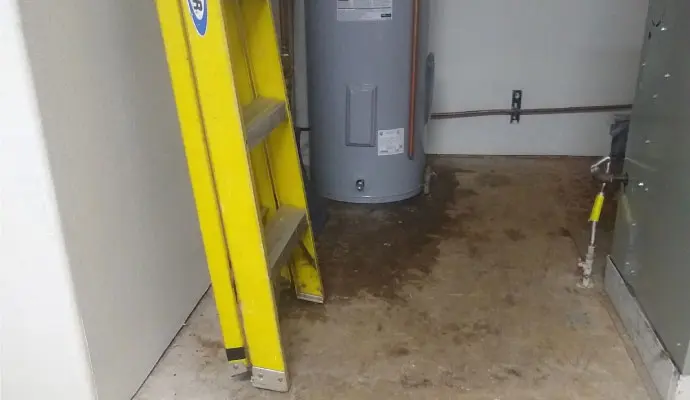
A leaking tank water heater is a cleanup job and a replacement job at the same time. In Covina, the replacement also comes with a plumbing permit and a short list of installation rules.
Key takeaways
- The City of Covina's residential water heater handout, effective January 1, 2023, calls for a plumbing permit on every replacement and every new installation.
- The permit goes to a plumbing contractor holding the state's C 36 classification or to an approved homeowner builder under city requirements.
- A drain pan with an outlet of at least 3/4 inch is required wherever a leak could damage the floor, subfloor, drywall or platform.
- A water heater in a garage needs a stand or platform that raises it at least 18 inches above grade.
- Shutting off the supply stops new water, but extraction and drying do not have to wait for the replacement.
A leak and a replacement in the same week
A tank that has started to leak cannot be patched with any lasting result, so the usual outcome is a new heater. In Covina that means a permit, and the cleanup and the installation need to be planned together.
The city's residential water heater handout took effect on January 1, 2023. It sets out both the paperwork and the way the new unit is set up, and water damage restoration fits around that schedule.
What the city handout asks for
The handout and the municipal code set out a short list. Details such as fees and inspection timing come from the city, so they are worth confirming before the work is scheduled.
The bracing guards against earthquake movement, while the pan and its outlet are there for leaks, so the two address different failures.
- Permit: a plumbing permit for every water heater replacement and every new installation.
- Enclosure: the heater placed in an enclosure or an approved cabinet, as the municipal code requires, plus a seismic bracing system.
- Drain pan: a pan wherever a leak could damage the floor, subfloor, drywall or platform.
- Pan outlet: an outlet of at least 3/4 inch that drains to the exterior of the building or an approved location.
- Garage stand: a stand or platform that holds the heater at least 18 inches above grade.
Who can pull the permit
Under the handout, a water heater plumbing permit may only be issued to a plumbing contractor holding the state's C 36 classification or to an approved homeowner builder under the city's requirements.
That affects scheduling. The plumber who replaces the tank can say who is pulling the permit, and the cleanup schedule can be built around that.
- Ask whether a permit is being pulled before the old tank comes out.
- Ask whether the new heater will sit in an enclosure or approved cabinet with seismic bracing.
- Ask whether the drain pan outlet will be at least 3/4 inch and drain to the exterior or an approved location.
- For a garage, ask whether the stand will hold the heater at least 18 inches above grade.
What a drain pan can and cannot do
A pan catches the slow leak that starts at a fitting, a relief valve or a pinhole. It does not hold a full tank.
When a seam fails, a tank can empty faster than a 3/4 inch outlet carries water away, and the overflow runs across the floor.
- A pan with a clear, sloped outlet moves small leaks to a safe place.
- A clogged or undersized outlet turns the pan into a shallow dish that overflows.
- A pan that has rusted through or cracked stops catching water.
- A garage heater on an 18 inch stand is raised off the floor, but a tank failure still floods the slab.
Where the tank sits changes the damage
Water from a failed tank follows the easiest path, and the location of the heater decides where that path leads.
Garage
Water spreads across the slab and toward the door. Boxes and stored items along the walls wick it up, and drywall at the base of the wall soaks it in.
Closet or utility room
Water runs into wall framing, under flooring and into the rooms beside the closet. A heater on an upper floor can send water through the ceiling below.
Early signs a tank is nearing failure
Tanks seldom fail without a warning, but the warnings are easy to miss in a garage or closet that nobody visits. Catching one early turns an emergency into a scheduled replacement, with the permit pulled before any floor is wet.
- Rust or white crust at the base of the tank or around the fittings.
- A relief valve that weeps or drips.
- Rumbling or popping while the tank heats, which can point to sediment.
- A damp pan, damp insulation or a stained floor beneath the heater.
- Hot water that turns rusty or lukewarm sooner than it used to.
When a tank lets go: first steps and first cleanup
Water from a failed tank can be hot, so children and pets stay out of the area. The aim of the first steps is to stop new water and make the room safe to work in.
First steps
- Close the cold water supply valve at the heater.
- Switch off the power at the breaker for an electric heater, or turn the gas control to off for a gas heater.
- Keep away from standing water near outlets and cords until the power is confirmed off.
- Move boxes, rugs and furniture out of the wet area.
- Photograph the tank, the pan, the floor and the walls before cleanup.
What the restoration team does
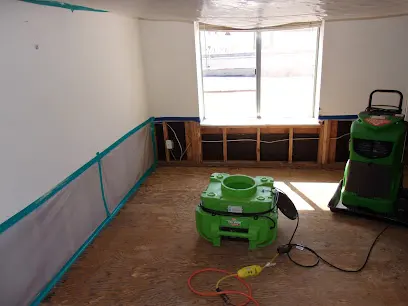
Extraction can start without waiting for the plumber, and water extraction begins with the standing water and the moisture readings. Water heater leak cleanup then handles the walls, flooring and framing that took on water.
- Extraction of standing water from the floor and low areas.
- Moisture readings on baseboards, drywall, framing and flooring.
- Removal of soaked insulation, drywall base and flooring that cannot dry.
- Dehumidifiers and air movers until readings match a dry reference.
- Photographs and readings kept for the repair file.
Questions
Does a water heater replacement in Covina need a permit?
Yes. The city's handout, effective January 1, 2023, calls for a plumbing permit on all water heater replacements and new installations.
How high does a garage water heater have to sit?
The handout calls for a stand or platform that raises it at least 18 inches above grade.
How big does the pan drain need to be?
At least 3/4 inch, draining to the exterior of the building or an approved location, wherever a leak could damage the floor, subfloor, drywall or platform.
Can the cleanup start before the new heater is installed?
Yes. Extraction and drying do not depend on the replacement, and starting early limits how far the water spreads into walls and flooring.
Who can pull the permit?
A plumbing contractor holding the state's C 36 classification, or an approved homeowner builder under the city's requirements.