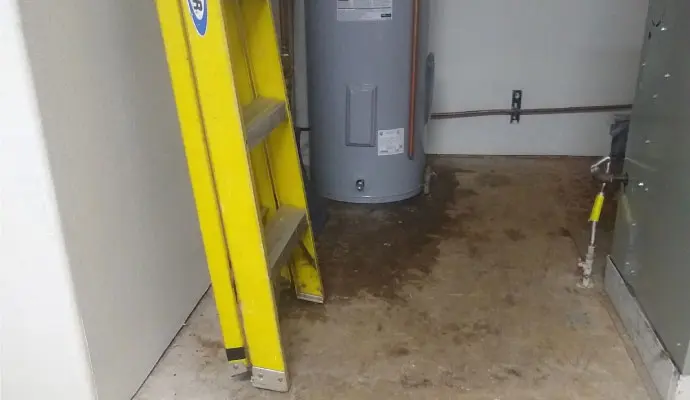
A water heater usually fails slowly, with a small leak at the base or a connection, until a tank or fitting finally gives way. The water then runs across the floor and into whatever sits against the wall, such as baseboards, cabinet bases and carpet edges. Cleanup and replacement are two separate jobs that happen around each other.
What Covina requires for a replacement
According to the City of Covina's residential water heater handout, effective January 1, 2023, every water heater replacement and new installation needs a plumbing permit. Only a C-36 plumbing contractor or an approved homeowner-builder can be issued that permit. The same handout, together with the municipal code, sets installation rules that a leaking unit often exposes:
- An enclosure or approved cabinet, plus a seismic bracing system
- A drain pan where a leak could damage the floor, subfloor or drywall
- A pan drain outlet of at least 3/4 inch that drains outside or to an approved location
- A stand or platform at least 18 inches above grade in a garage
How the cleanup runs alongside the plumber
The plumber shuts off the water and the fuel or power supply, drains the tank and handles the permit. The cleanup crew extracts the floor, pulls wet baseboards, checks the cabinet bases and wall bottoms with a meter and dries them. Photos of the tank, the pan and the damage go into the claim file, and details such as the pan and the stand help an adjuster see what failed. Water that reached other rooms is dried as structural drying.
Signs the leak has spread
A musty smell in the closet, baseboards that peel from the wall, carpet that feels cold or a stain on the drywall behind the tank all mean the water traveled past the visible puddle. Those spots should be tested before the wall is closed, and appliance leak water damage covers similar hidden paths.