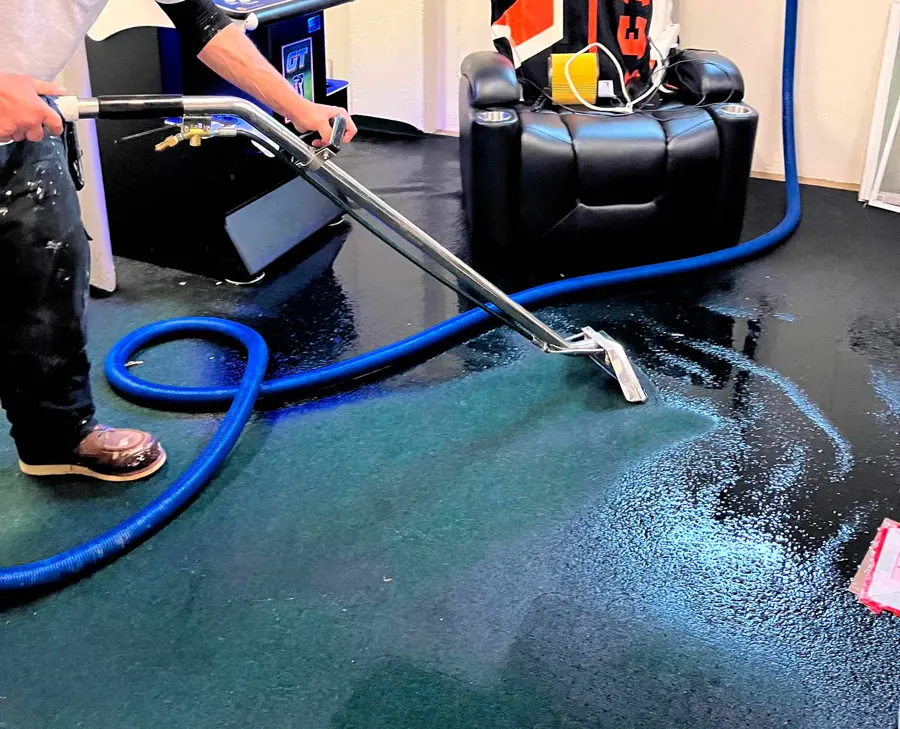
Extraction takes out the bulk water that dehumidifiers cannot handle. In Covina, that water tends to come from a failed supply pipe, a washing machine or water heater, a roof drip, or street runoff in a winter storm. The longer it sits in pad and wall bottoms, the more has to be torn out, which is why structural drying follows right behind.
What an extraction visit includes
A typical visit follows this order in each wet room:
- Standing water is pumped or vacuumed off the floor surface.
- Carpet is pressed with a weighted wand to squeeze out the pad.
- Pad that will not dry in place is cut out and hauled away.
- Baseboards are checked and pulled where water crept behind them.
- A moisture meter confirms what stays wet before equipment is chosen.
Why the water spreads farther than it looks
Water does not stay where it landed. It wicks up drywall, runs under baseboards and follows the floor toward the lowest spot. Covina has 5,695 homes in buildings with two or more units, so an overflow in one apartment can drip through a shared ceiling or soak a shared wall. That is why the first pass includes the neighboring rooms and, in a building, a call to the manager so adjoining units can be checked as well.
Street water and storm water in Covina
Not every extraction starts inside the house. On March 29, 2012, a water main break flooded and buckled part of San Bernardino Road in an unincorporated county area near Covina, and on May 22, 2008 a flash flood warning covered an area that included Covina. Water that comes in from outside is treated as contaminated until proven otherwise, so crews wear protective gear and remove soaked porous materials rather than trying to save them. Bigger outside-water jobs are covered under storm runoff and flood cleanup.