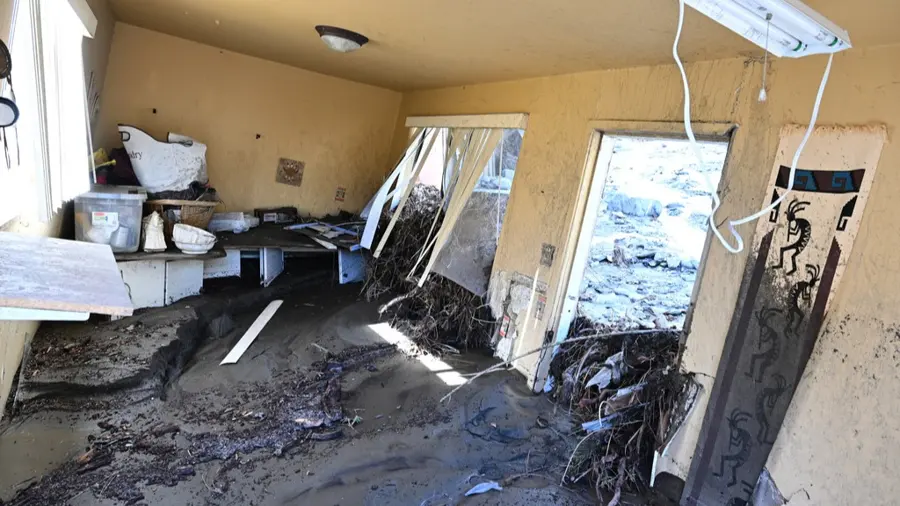
Slopes stripped of plants can shed rain and soil faster than slopes that still have plants on them. Around the Fish Fire burn area in Duarte, that has meant evacuation orders, closed streets and mud on the pavement after major storms.
Key takeaways
- The Fish Fire started on June 20, 2016, near Opal Canyon Road and Brookridge Road, and burned 4,253 acres.
- Before the February 17, 2017 storm, Duarte ordered mandatory evacuations for about 180 homes, and the count rose to 202 by Friday morning.
- About 1,300 cubic yards of mud was cleared from city streets after that storm, and the order was lifted on Saturday, February 18.
- Reports from these storms describe evacuations, closures and mud in streets. If mud and water do enter a house, the work is mud removal, extraction and structural drying.
- The fire explains why the slopes shed water and soil. The work described here is water and mud cleanup after storms.
How a burn area changes what a storm brings
The Fish Fire started on June 20, 2016, near Opal Canyon Road and Brookridge Road, close to the border between Duarte and Azusa. It burned 4,253 acres, and with the Reservoir Fire it formed the San Gabriel Complex Fire.
Slopes stripped of plants can shed rain and soil faster than slopes that still have plants on them. That is why a storm over a burn area brings mud as well as water.
A debris flow is a fast moving mix of water, mud and rocks, and it behaves differently from a slow rise of water. Flood cleanup depends on which of the two reached a building.
The fire itself is history. What matters to a homeowner now is the ground it left behind and how that ground behaves in heavy rain.
What the storms of 2016 and 2017 showed
The record from the first storm seasons after the fire is detailed, and it shows how quickly conditions changed.
October 2016: preparing ahead
Ahead of a storm in October 2016, the city placed concrete barriers and sandbags near Brookridge and Mel Canyon roads. Firefighters tagged about 10 homes near the foothills.
January 2017: precautionary orders
An intense rainstorm on January 22, 2017 led to precautionary evacuation orders for about 180 homes in the Fish Fire impact area. The orders were lifted at 2 p.m. on January 23.
February 2017: the atmospheric river storm
A storm fed by an atmospheric river over the Pacific led the city to order mandatory evacuations for about 180 homes near the burn area, and the count rose to 202 by that Friday morning.
Streets closed at Royal Oaks and Greenbank, Royal Oaks and Mel Canyon, Fish Canyon at Mel Canyon, Brookridge and Tannencrest, and Sunnydale Drive and Westvale Road, among others.
About 1,300 cubic yards of mud was cleared from the streets after the storm, and the evacuation order was lifted on Saturday, February 18.
Orders and alerts since then
The pattern continued. On November 7, 2022, a mandatory evacuation order took effect at 11 p.m. for the burn area, covering homes on Mel Canyon Road from Brookridge Road to Fish Canyon Road.
On February 23, 2023, Los Angeles County issued a Mudflow Alert and a Yellow Alert for the burn scar area, and Mel Canyon Road was closed that Thursday night.
Mel Canyon Road is named in both of these events, which makes it a useful reference point for residents in the area.
What the record does and does not show
Reports from these storms describe evacuations, closures and mud on streets. They do not describe water or mud inside houses, and nothing here claims that any home was flooded.
The cleanup information that follows is for the case where mud and water do reach a building, whether near the burn area or in any foothill community.

If mud and water do reach a house
Water that carries mud is floodwater from outside, so the restoration team treats it as contaminated, Category 3 water, and removes porous materials that it soaked. The work starts with mud removal and extraction, then moves to the structure.
Water extraction removes the standing water that mixes with the mud. The first steps for a household are short.
- Wait for officials to lift any evacuation order before going back.
- Wear boots and gloves, and keep children and pets out of the mud.
- Turn off power at the breaker only if the panel is dry and safe to reach.
- Photograph how high the mud reached on the walls and the condition of floors and belongings.
- Shovel mud out while it is still soft, since dried mud is harder to remove.
Drying after the mud is out
Once mud and standing water are gone, the structure still holds moisture. Wall bottoms, insulation, subfloors and flooring are measured, opened where needed and dried until readings match a dry reference.
Fine silt works into door tracks, vents, cabinet bases and wall bottoms, which is why cleaning continues after the visible mud is gone. Structural drying explains the equipment and the daily checks.
- Mud and silt out of rooms, closets and the lowest areas first.
- Wet carpet, pad and soaked insulation removed.
- Lower drywall opened where readings stay high.
- Dehumidifiers and air movers run until readings match a dry reference.
- Hard surfaces washed and disinfected.
Getting ready before the next alert
None of this replaces instructions from officials. It only shortens the first day back, when decisions are made quickly and records are easy to lose.
- Know which streets close in a storm, such as Mel Canyon Road.
- Keep papers, medicine and chargers in one grab bag.
- Photograph rooms and the yard now, so later photographs have a comparison.
- Watch for County alerts, including a Mudflow Alert or a Yellow Alert.
- Move valuables off floors and out of low rooms when a storm is forecast.
- Know where the main water and power shutoffs are, and who in the household can reach them.
Questions
Does the Fish Fire burn area still matter for storms?
Orders in November 2022 and alerts in February 2023 were still tied to the burn area, so storms continued to bring attention to Mel Canyon Road.
What is the first step if mud enters a house?
Wait for officials to lift any order, then photograph how high the mud reached and start removing mud while it is soft.
Is floodwater with mud treated as clean water?
No. Water from outside that carries mud is treated as contaminated, so porous materials it soaked are usually removed.
Why does drying continue after the mud is gone?
Wall bottoms, insulation and subfloors stay wet after surfaces look clean. Readings show when the structure matches a dry reference.
What is a debris flow?
A fast moving mix of water, mud and rocks that can follow heavy rain on a burned slope. It differs from a slow rise of water, and the cleanup depends on what reached the building.
Why does a 2016 fire matter for storm cleanup today?
Burned slopes shed water and soil faster than slopes with plants on them, so storms over the burn area bring mud. The fire is background, and the work described here is water and mud cleanup.