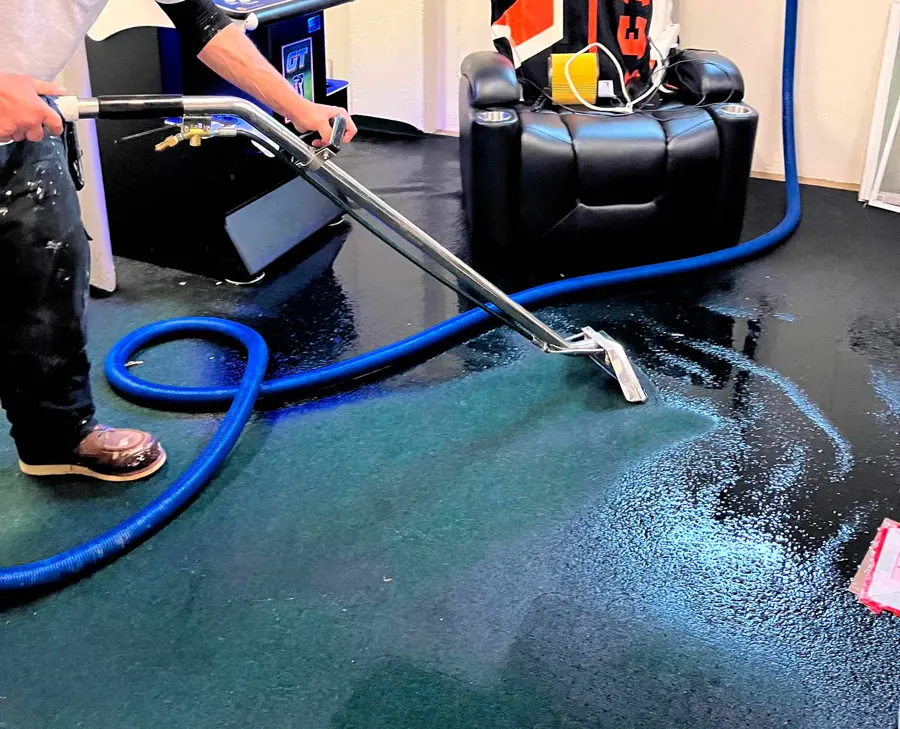
Extraction is the first job on almost every water loss, because water that sits in carpet, pad and wall bottoms makes the drying phase longer and the repair bill larger. In Duarte, that can mean clean water from a failed pipe, gray water from an overflow, or mud-laden runoff from a foothill storm, and each needs different handling.
What an extraction visit covers in a Duarte home
Each visit follows the sequence used in Duarte water damage restoration, adjusted for the materials involved and for whether the water is clean, gray or contaminated:
- Standing water pumped from floors and low spots
- Carpet pressed out with a weighted extraction tool
- Soaked pad cut away and hauled out when it cannot dry
- Mud shoveled before the wand ever touches the floor
- Moisture readings taken on the walls and subfloor
Mud, storm water and shared buildings
Storm water in Duarte often carries soil. About 1,300 cubic yards of mud was cleared from city streets after the February 2017 storm, so crews expect to shovel before they extract. Contaminated storm water also changes the job: carpet and pad that soaked it up are removed, not dried, and surfaces are treated with antimicrobial before any drying equipment goes in. With 1,972 Duarte homes in buildings with two or more units, water on one floor can also reach a neighbor's ceiling, so extraction is planned unit by unit.
Why extraction comes before any drying equipment
Air movers and dehumidifiers work on moisture that is bound in materials, not on a puddle. Water left on the surface keeps loading the air, so dehumidifiers run harder and structural drying takes longer. Pulling the bulk of it out first, then mapping what remains, lets the equipment concentrate on wet drywall, framing and subfloor, and it gives the claim file a clean starting record. Skipping this step is a common reason a room still reads wet after the equipment has run for days.