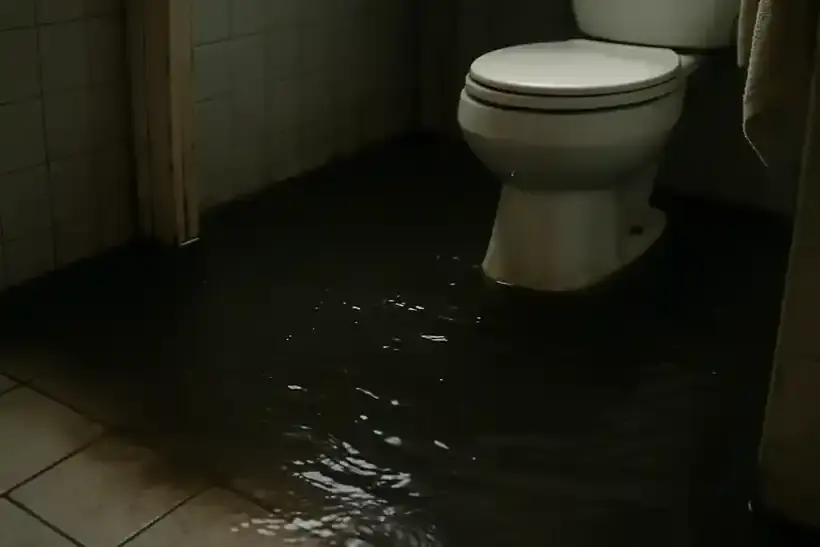
When a toilet gurgles and a floor drain fills with dark water, the first question is who to call. In San Dimas the answer depends on where the blockage sits: in the house, in the private pipe to the street or in the city's sewer.
Key takeaways
- The city owns its local sewer pipes, and the Los Angeles County Consolidated Sewer Maintenance District primarily maintains them.
- For sewer emergencies, the city's sewer page directs residents to the district directly. Other sewer questions go to the city's Public Works Department.
- Los Angeles County Public Works says the private property owner is responsible for the entire length of a lateral, including the part under the public right of way. That is county policy, not a city rule.
- Portions of the city are on septic systems, so a backup can also be a septic problem.
- Sewage is Category 3 water: keep people out, and leave extraction and disinfection to a restoration team.
Two drainage systems, only one carries sewage
The city says it has two drainage systems: the sewers and the storm drains. The storm drains carry excess rainwater from city streets to channels, creeks and the San Gabriel River, and they have nothing to do with a toilet or a floor drain.
That split matters during a backup. A flooded street and a flooded floor drain involve different systems, and only the sewer side calls for sewage backup cleanup.
Sinks, toilets, showers and floor drains connect to the sewer side. Street grates and roof drains usually belong to the storm side, so water coming up through a floor drain is a sewer question.
Who maintains what
Responsibility changes along the pipe, from the house to the street to the city's sewer. The list below follows that path.
- Local sewer pipes: owned by the city.
- Maintenance of those pipes: primarily the Los Angeles County Consolidated Sewer Maintenance District.
- Sewer emergencies: the city's sewer page directs residents to the district directly.
- Other sewer questions: the city's Public Works Department.
- The lateral: Los Angeles County Public Works says the private owner is responsible for the entire length, including the part under the public right of way.
A note on the lateral
The lateral rule is county policy, stated for the district that maintains the sewer mains, and not a city rule. A property owner who is unsure where responsibility begins can ask the district or Public Works.
Telling a house drain problem from a main problem
The pattern of a backup says a lot about where the blockage sits. One fixture that will not drain usually means a blockage close to that fixture, while several fixtures failing together point further down the pipe.
A plumber can run a camera through the pipe to see where the blockage sits, which also shows whether the cause is a clog, roots or a break.
- One toilet or sink slow: a plumber can clear the fixture or its branch drain.
- Several fixtures slow at once: the blockage may be in the lateral or the main.
- Dark water rising in the lowest tub, shower or floor drain: the pipe downstream is blocked.
- A backup that returns after clearing: the cause may be roots, a break or a problem outside the house.
Who to call first
If the problem looks like the main, the district is the contact for emergencies. If it looks like the lateral or the house drain, a plumber is the first call.
Septic systems in parts of San Dimas
The county's East San Gabriel Valley Area Plan says portions of the city are on septic systems. It does not name streets, so a property owner should confirm whether a home connects to a sewer or to a septic tank before deciding who to call.
A septic backup follows a different path from a sewer backup, with a tank and drain field in place of a city main. The water that reaches a floor needs the same careful cleanup.
Why sewage water is handled differently
Sewage is Category 3 water, which means it carries bacteria and other contaminants. Contact with it, even through wet carpet or drywall, is a health risk.
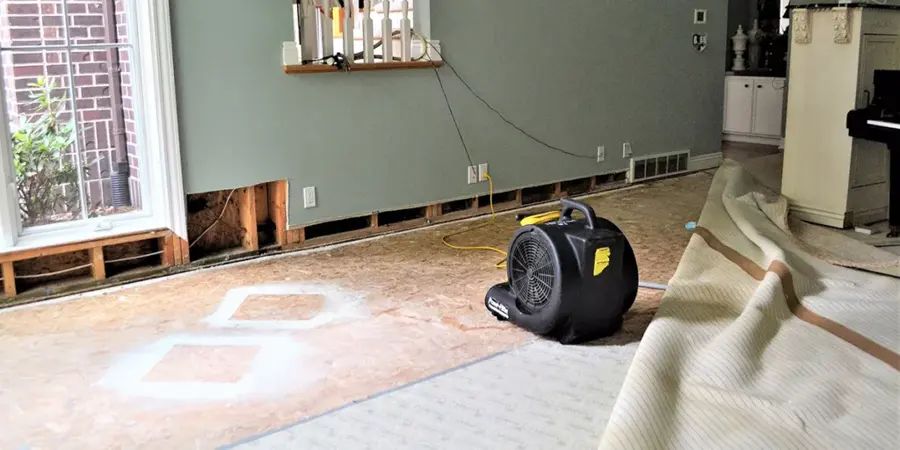
A water damage restoration team removes the water and the porous materials it touched, then disinfects what stays.
- Keep children, pets and unprotected adults out of the wet area.
- Stop using toilets, sinks and showers until the blockage is cleared.
- Turn off power to the wet area only if the panel is dry and the switch can be reached safely.
- Do not use a household vacuum on sewage water.
- Wear boots and gloves if the area must be entered, and wash up afterward.
- Photograph the water and the damage before cleanup begins.
After the blockage is cleared
Clearing the pipe stops new water but does not clean the house. The restoration team extracts what remains, removes carpet pad, baseboards and drywall that absorbed sewage, then dries and disinfects the structure.
Porous materials that touched sewage rarely come back. Carpet pad, insulation and the lower part of drywall are usually replaced, and hard surfaces are cleaned and disinfected.
Toilet overflow cleanup applies to smaller overflows, where the water may fall into a lower category.
Records that help
A backup can involve a plumber, the district, the city and a claim, so a short record keeps the story straight.
- The date and the time the backup was found.
- Photographs of the water, the fixtures and the damage.
- The plumber's findings, including where the blockage sat.
- Anything said by the district or Public Works, with the date.
- A list of damaged flooring, furniture and belongings.
Questions
Who owns the sewer pipe between a San Dimas house and the street?
Los Angeles County Public Works says the private owner is responsible for the entire length of a lateral, including the part under the public right of way. The city owns its local sewer pipes, which the county district primarily maintains.
Who is called for a sewer emergency here?
The city's sewer page directs residents to the Los Angeles County Consolidated Sewer Maintenance District for sewer emergencies. Other sewer questions go to the city's Public Works Department.
Can a homeowner clean up sewage water alone?
Small spills on hard floors can be handled with care. A backup that reaches carpet, drywall or cabinets needs a restoration team because of the contamination.
Is a backup during a storm a storm drain problem?
Not necessarily. Storm drains carry rainwater from streets and sewers carry wastewater from homes, so a backup in a toilet or floor drain points to the sewer side.
What if the home is on a septic system?
A tank and drain field replace the city main, so a septic service or plumber is the first call. Anything that reached the floor needs the same cleanup.
What should be written down when contacting the district?
The address, the time the backup was noticed, which fixtures are affected and whether one drain or several are involved. A short description helps the district decide where to look.