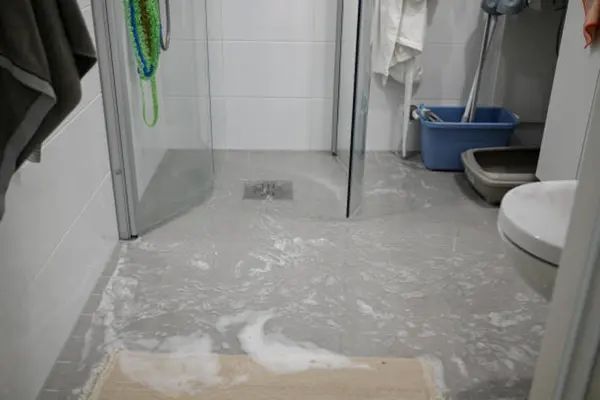
Not every toilet overflow is the same. A clogged bowl that spills clean tank water is a different job from a backup pushing waste up from the drain, and the difference decides whether floors can be dried or must be removed.
Fixture clog or sewer backup
If only one toilet overflows, the clog is usually at the fixture or its drain. If a tub, sink or floor drain also gurgles or fills, the blockage is likely in the lateral or the main. In San Dimas the city owns the local sewer pipes and the Los Angeles County Consolidated Sewer Maintenance District primarily maintains them. Los Angeles County Public Works puts the whole lateral, up to and including the part under the public right of way, on the private owner.
Sorting the water by category
How the overflow is handled depends on what came out. A meter reading on the floor and the wall base then shows how far the water traveled:
- Clean tank or supply water often allows carpet to be dried in place.
- Bowl water with waste is gray or worse, so porous materials come out.
- Any backup from the drain is treated as Category 3.
- Water that reached the ceiling below is read with a meter.
Septic and sewer connections
The county's East San Gabriel Valley Area Plan says portions of Diamond Bar, Pomona, San Dimas and Walnut are on septic systems, so the cause of a stubborn overflow may be a tank rather than a sewer lateral. A plumber finds the cause, and the restoration crew handles the water and the contamination left on the floor. Wet floors under vinyl or tile get a meter check at the seams, where overflow water tends to hide. See sewage backup cleanup for the full contaminated-water process.