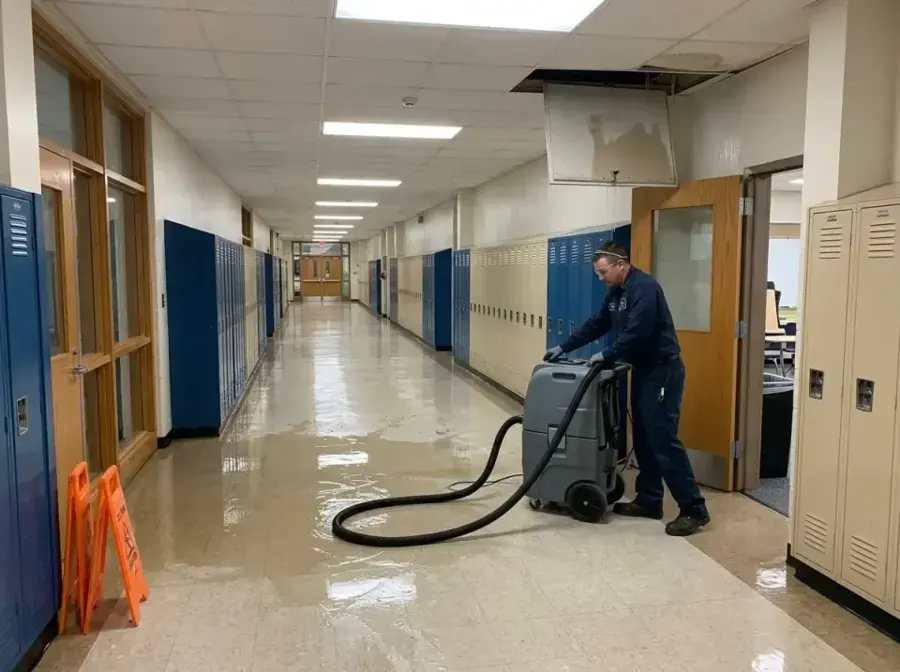
A Downtown Covina shop or restaurant that loses water loses more than floor space. Stock, equipment and opening hours are all at stake, and the first day sets how much of each survives.
Key takeaways
- The city describes its downtown as a mix of mom and pop shops, restaurants, clothing stores, hobby shops and antique stores, with a renovated performing arts center as its cornerstone.
- Paper, cardboard, fabric and electronics come off wet floors first, because they absorb water or are damaged by it fastest.
- Photographs taken before anything is moved, plus moisture readings, are the backbone of the claim file.
- Drying can be phased, so one part of the space reopens while another is still being dried.
- Commercial, industrial and multi family properties follow the City's cross connection control policy, and properties on City water service test backflow devices annually.
What makes a downtown business loss different
The city describes its downtown as a mix of mom and pop shops, restaurants, vintage and modern clothing stores, hobby shops and antique stores, with the renovated Covina Center for the Performing Arts as its cornerstone.
Each of those businesses depends on different stock. A clothing rack, a restaurant kitchen and a shelf of antiques react to water in different ways, so the first walk through the space is a triage.
That triage decides what moves, what stays and which part of the business can keep running. It also decides who needs to be told, from the landlord to the suppliers with deliveries due.
Where the water comes from in a shop or restaurant
Commercial losses come from the same kinds of failures as home losses, but the equipment list is longer. Kitchens, back rooms and restrooms add water sources that a home does not have.
The last item below is a different category of water. It is handled under sewage backup cleanup, and the affected area stays closed until it has been cleaned.
- Supply pipes and fittings: a failed joint above a ceiling or inside a wall.
- Water heaters and ice machines: tanks and drain connections that fail.
- Dishwashers, mop sinks and prep sinks: hoses and drains in the kitchen.
- Roof and storm water: rain entering through a roof, a skylight or a back door.
- Floor drains and restroom fixtures: a backup that brings sewage into the space.
The first day: stop the water, protect what matters, photograph
Speed matters, but order matters more. Stopping the source and protecting stock come before cleanup.
- Shut off the water at the nearest valve, or the main valve if the source is unclear.
- Turn off power to wet areas if that can be done safely, and keep customers and staff out of standing water.
- Lift stock, paper records and electronics off wet floors and away from wet walls.
- Photograph the source, the wet areas and the stock before anything is moved or thrown out.
- Write down the time the water was found and who was told.
- Tell the landlord or property manager, and anyone with a delivery due.
Triage: what to move first and what to set aside
Porous items soak water up and sideways. Hard goods can often be wiped and dried, so they come later.
- Cardboard boxes and paper records: they wick water and fail quickly, so they move first.
- Fabric, clothing racks and displays: lifted and spread out so air can reach them.
- Electronics and point of sale equipment: taken off the floor and out of the room, and left unplugged until checked.
- Food and open supplies near the water: set aside rather than served or sold.
- Fixtures and shelving: left in place unless they block the drying equipment.
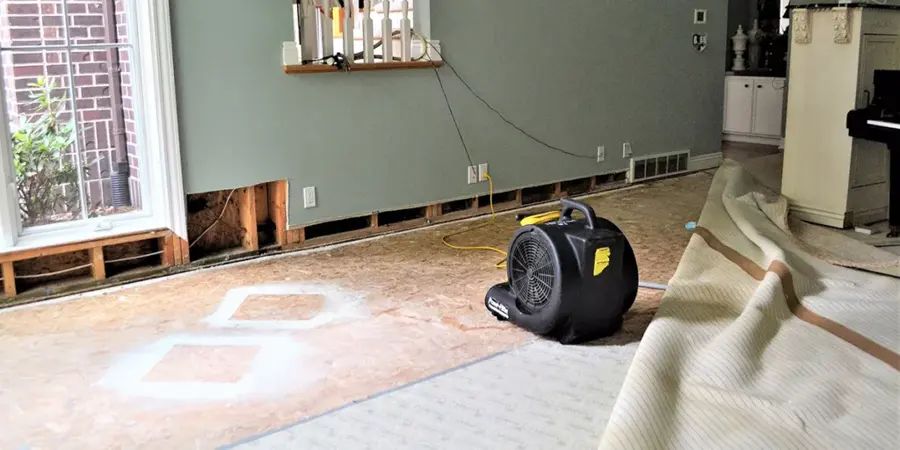
How the restoration team works around an open business
A commercial loss is measured before it is dried. The restoration team maps moisture across the floor, the walls and the ceiling, then places equipment where the readings call for it.
Commercial water damage restoration follows the same IICRC S500 standard as a home loss, with the schedule built around trading hours.
- Extraction of standing water and wet floor coverings.
- Containment and zoning of the wet area.
- Air movers and dehumidifiers sized to the readings.
- Daily readings until the area matches a dry reference.
Phasing the drying
Not every part of a loss dries at the same speed. Tile and concrete dry on one schedule, drywall and wood on another, and ceilings on a third.
Structural drying can be staged so noisy work happens after closing, and so a sales floor or dining room that stayed dry keeps serving customers.
- Wet zone: sealed off and dried first.
- Buffer zone: a taped or sheeted barrier between wet and open areas.
- Open zone: kept running, with a moisture check each day.
Backflow devices and the water supply
Commercial, industrial and multi family properties here follow the City's cross connection control policy. Properties that receive City of Covina water service must test their backflow prevention devices annually.
After a water loss, a plumber may need to confirm that devices and valves still work before the supply is fully restored. The owner should also know which provider sends the water bill, because several water providers serve parts of the city.
- Ask the plumber whether the backflow device still passes its test.
- Ask whether any valve or fitting that failed needs replacing before the supply is turned back on.
- Keep the annual test record with the other loss records.
Records that keep the reopening on track
A downtown business answers to landlords, suppliers and customers, so a clear record shortens every conversation.
- Dated photographs of the source, the wet areas and the stock.
- An inventory of damaged goods and equipment, with quantities and condition.
- Copies of the moisture readings from each visit.
- Notes on any closed days or partial openings.
- The plumber's or roofer's report on the cause.
- Receipts for emergency purchases such as fans, tarps or temporary storage.
Questions
Can a restaurant or shop stay open during drying?
Sometimes. Containment and zoning can keep a dry area open while the wet zone is dried, depending on the size of the loss and where the water went.
What should come off the floor first?
Paper, cardboard, fabric and electronics, because they absorb water or are damaged by it fastest.
Who handles the plumbing repair?
A plumber stops the source and repairs it, while the restoration team removes water and dries the structure. The two jobs overlap, so both can start early.
Does the same drying standard apply to a business as to a home?
Yes. The IICRC S500 standard applies to both. Moisture is measured, equipment is placed to match, and drying ends when readings match a dry reference.
Why photograph before cleaning up?
Photographs show the loss as it was found, which supports the repair plan and any claim.
What if a landlord owns the building?
Tell the landlord or property manager in writing, share the photographs and readings, and ask who is arranging the plumber and any structural repairs.