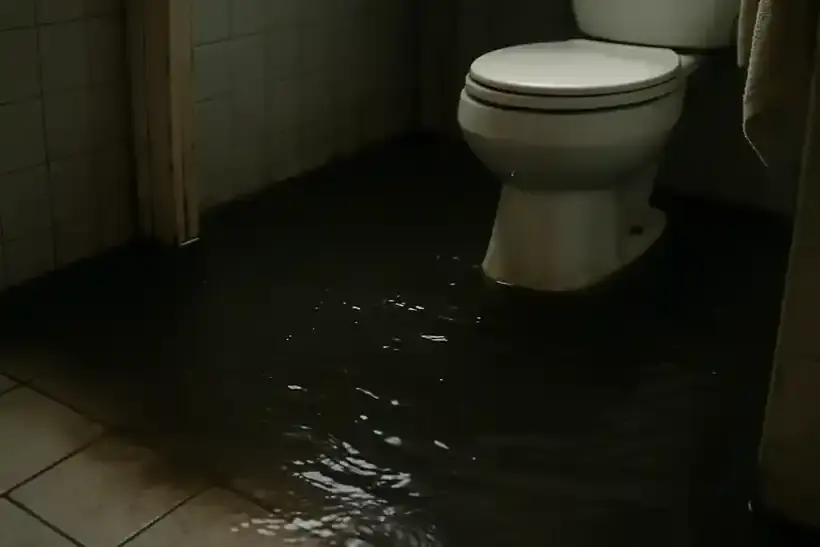
A sewage backup pushes drain water up through the lowest opening in the house, usually a tub, shower, floor drain or toilet. That water carries bacteria and cannot be cleaned out of porous materials, so carpet, pad and wet drywall are removed rather than saved.
The property side of a backup
The City of Covina's Public Works page says homeowners are responsible for maintaining the house connection to the sanitary sewer, including the lateral itself and the surrounding environment, such as nearby trees and their roots. In practice, the lateral and its roots are the first thing a plumber checks when a drain backs up. A camera inspection shows where the stoppage sits, and cleanup can start as soon as the water stops rising. If the backup shows up in more than one fixture, mention that when you call, because it helps the plumber decide where to look first.
What the cleanup involves
Every step is aimed at keeping contamination from traveling into rooms that stayed clean.
- The room is sealed with plastic while HEPA air scrubbers run
- Crews wear suits, gloves, boots and respirators
- Carpet, pad, lower drywall and cabinet bases are cut out and bagged
- Hard surfaces are washed, then treated with an antimicrobial
Drying after the contamination is gone
Once contaminated materials are out, the remaining structure is dried like any other wet job, with air movers, dehumidifiers and daily meter readings. Floors and wall bottoms are cleaned a second time before equipment goes in, and wall cavities near the backup are checked for moisture before any finish materials go back. Toilet overflow cleanup covers smaller bathroom events, and structural drying covers the equipment.