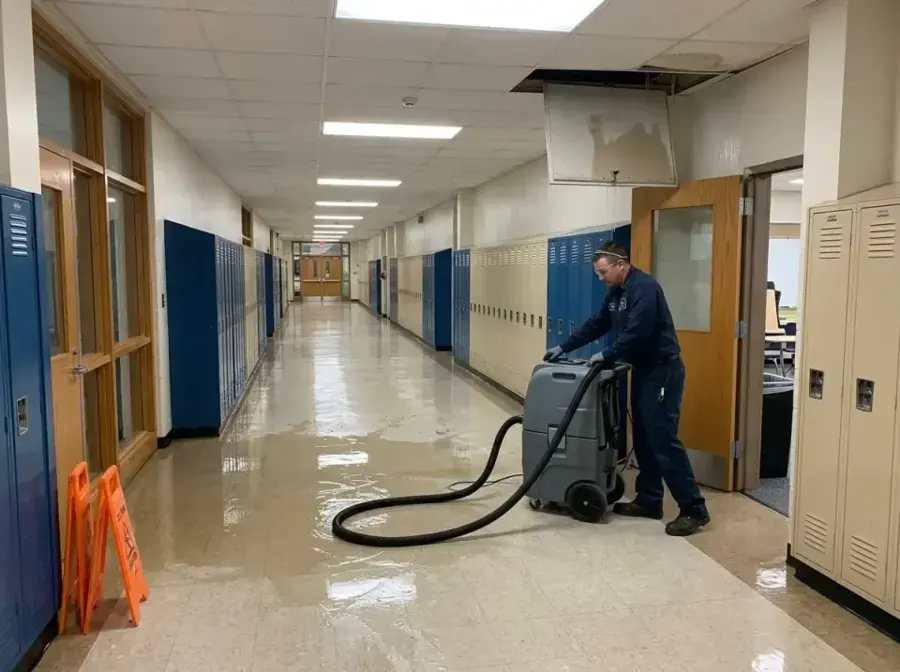
A commercial loss is a scheduling problem as much as a drying problem. Tenants, customers and students need the space back, and the owner or manager needs a clear record for the insurer. The plan is built around which areas can stay open, which must close and how the equipment and power will be handled.
Employers and buildings in Covina
The City's 2023 Annual Comprehensive Financial Report lists the Covina-Valley Unified School District (1,351 employees), IKEA (292), Walmart (287) and The Home Depot (189) among the top employers, alongside the City of Covina itself at 252. That report is dated, but it shows the range of buildings involved, from school hallways to retail floors. Downtown Covina adds shops, restaurants and the renovated Covina Center for the Performing Arts.
Water rules that affect commercial properties
Commercial, industrial and multi-family properties must comply with the City of Covina's cross-connection control policy, and properties that receive City water service must test backflow prevention devices annually. Those records are worth keeping with the loss file so the plumber and the adjuster can see the building's water setup. Which provider serves a building also matters, because four other providers serve parts of Covina.
How a commercial dry-out is staged
- Extraction and tear-out start in the wettest areas first
- Containment keeps dust and moisture out of open spaces
- Larger air movers, LGR and desiccant units are staged by zone
- Daily reports go to the manager with photos and readings
- Temporary power is planned where circuits are affected
Equipment details are under structural drying, and storm-driven losses are covered under flood cleanup.