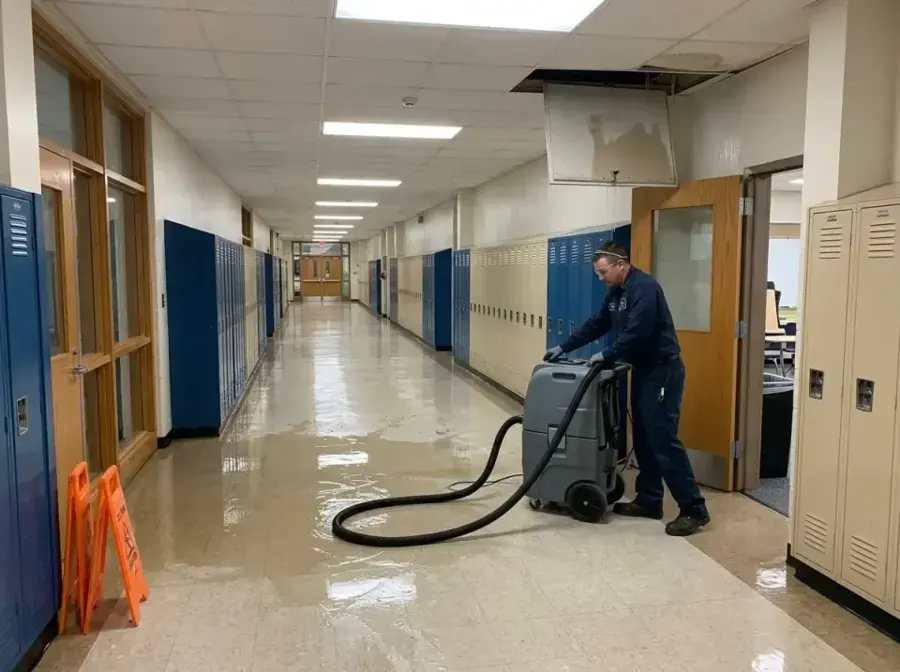
In a commercial building, water damage is a scheduling problem as much as a drying problem. Tenants, students, staff or patients still need space, so containment, phasing and clear communication decide how much of the building stays in use.
Duarte's commercial and institutional buildings
Duarte's mix of buildings shapes how a loss is handled:
- The City of Hope main campus covers 110 acres
- Santa Teresita Rest Home and Duarte Unified School District campuses
- Buildings along the Huntington Drive corridor
- The Duarte Station Specific Plan area beside the Duarte/City of Hope station
- 942 homes in buildings with 50 or more units
How commercial drying is phased
Large buildings dry in zones. The crew isolates the wet zone with containment, extracts and removes wet materials, then places air movers, LGR units and desiccant dehumidifiers so that the rest of the building keeps its air and power. Schedules are shared with the manager each day, and work near corridors, classrooms or patient areas can be moved to off hours when the building allows it.
Reports, records and the claim file
Property managers and insurers want the same facts: what was wet, what was removed, how long equipment ran and what it cost. Daily moisture readings, equipment counts, photos and itemized invoices are kept in one file per area, and each tenant or unit is documented separately. Larger losses follow the same method as structural drying, scaled to whole floors, and the Duarte water damage restoration overview shows where commercial work fits.