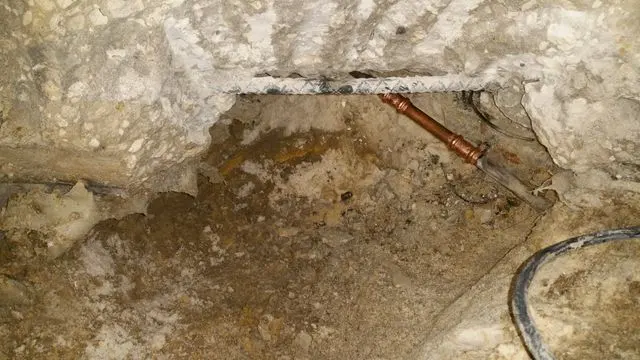
Slab leaks are quiet. Water escapes from a pipe beneath the floor and moves sideways through the concrete, so the first signs are often a warm spot underfoot, damp baseboards or flooring that lifts at the edges. By then the slab, the padding and the wall bottoms may all be holding moisture. A plumber has to repair the pipe itself; the drying crew handles the water already in the structure.
Signs that a leak is hiding under a Duarte floor
Check for these before ordering any floor removal:
- A warm patch on the floor with no heat source
- Water running on a meter with every fixture off
- Baseboards swelling or paint bubbling low on walls
- Tile joints darkening or tiles popping loose
- A musty smell that returns after the room is aired out
What home age means for hidden leaks
Duarte's median home was built in 1968, and 5,638 of its 7,832 homes were built before 1980, with 1,836 from the 1950s alone. Homes with that much time behind their plumbing deserve a careful look when moisture shows up under a floor, though age alone never proves where a leak is. A moisture map of the room, the walls and the slab shows how far the water traveled. So the assessment, like every Duarte water damage restoration job, starts with readings, not assumptions about what is under the floor.
How the slab and flooring get dried
Crews map moisture across the floor, then lift tile, laminate or carpet only where readings show trapped water. LGR dehumidifiers pull vapor from the room while directed air movers and panels push drying into the concrete. Daily readings show whether the slab is releasing water, and the plumber's repair is scheduled so the floor is not dried and wetted twice. Hardwood floor drying needs the same care, because boards cup when the slab beneath keeps releasing water.