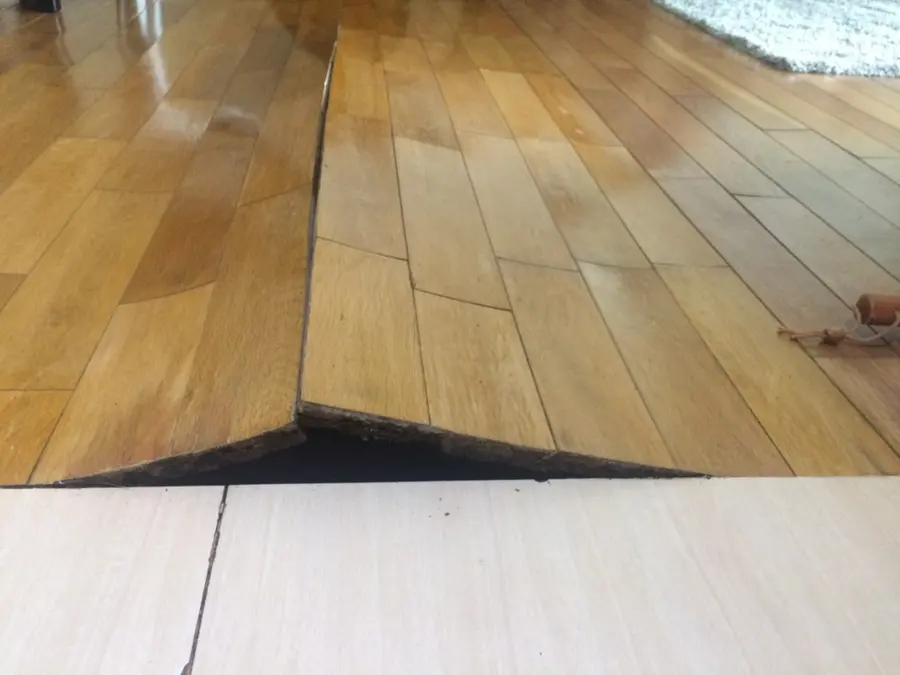
Wood is a natural sponge. Water enters through the seams and from underneath, the boards swell, and as they dry unevenly they cup at the edges or buckle off the subfloor. What matters is how fast the moisture is pulled out and whether the boards were soaked from clean water or from something worse.
What decides whether boards can stay
Technicians weigh these factors before choosing between drying and removal:
- Whether the water was clean, gray or contaminated
- How long the boards have been wet
- Moisture readings in the wood and the subfloor
- Whether the floor is glued, nailed or floating
Drying a hardwood floor in place
When the boards are only damp, panels or mats set on the floor draw moisture from the surface while dehumidifiers pull it from the air. Small holes or lifted boards along the edges let air reach the cavity under the wood. Readings are taken every day, because hardwood should dry slowly and evenly, and forcing it too fast can split boards. If the floor flattens and the readings come down, it can often be sanded and refinished later.
When removal is the better call
Boards that have buckled off the subfloor, floors soaked with sewage or storm runoff, and floors left wet for a long time usually come out. Removing them lets the subfloor dry fully, which protects the new floor from the same problem, and it gives the claim a clear record of why the wood could not be saved. The adjoining rooms follow the steps used for water extraction, and the wider Duarte water damage restoration process covers the paperwork.