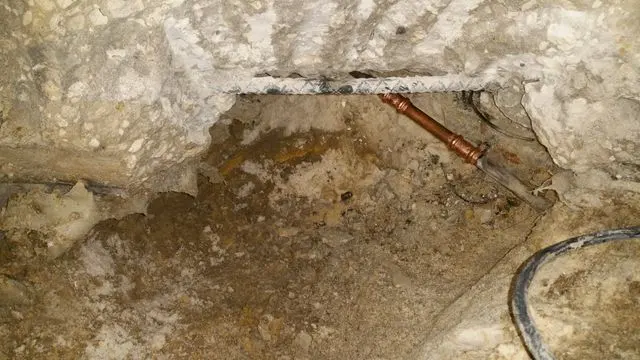
When a home sits on a concrete slab, its supply pipe runs beneath or inside the concrete, and a leak there spreads below the flooring long before a puddle shows. In Azusa, where the median home was built in 1970 and the 1950s were the biggest building decade, plumbing age is the main reason these leaks turn up.
Signs of a slab leak in an Azusa home
The restoration crew looks for the quiet signs before anything gets lifted:
- Carpet that feels damp in one area or along one wall
- Tile or wood that feels warm above a hot water pipe
- Baseboards that puff up or stain along their lower edge
- A meter dial that still spins while every tap is closed
- Water running somewhere under the floor when the house is quiet
Shutting the water off and fixing the leak
Azusa Light & Water Rule 14 has every owner keep a working shut-off valve inside the property line, close to the water meter, and closing it stops the leak from feeding the floor. A plumber then locates the break and either cuts into the concrete to fix it or abandons that run and reroutes new pipe overhead. The restoration team maps the moisture at the same time, so drying can start the moment the repair is done. The Azusa water damage restoration overview covers the other common losses here.
How the concrete and the walls get dried
Concrete releases water slowly. The drying team strips out soaked pad and tack strip, raises tile or wood only where meters keep reading wet and aims air movers and LGR dehumidifiers at the bare slab, adding a desiccant unit for dense areas. Wall bottoms get opened only where the drywall stays wet. The floor is done once it matches an unaffected spot in the same home on the meter, and wood floors laid over damp concrete often need hardwood floor drying as well.