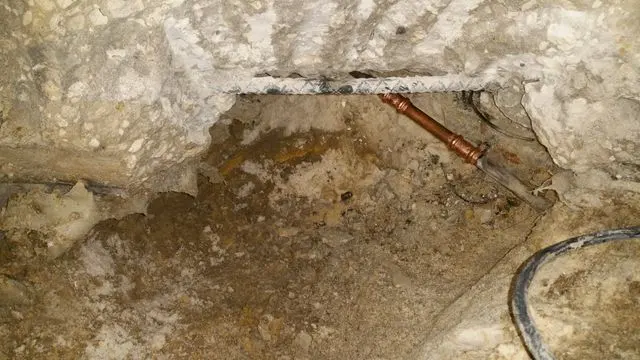
A slab leak is a break in a pipe that runs under or through the concrete floor. Water rises into the flooring above and spreads sideways into the base of the walls. Because it starts out of sight, the first job is to locate the wet area, not to guess at it.
Signs that water is moving under the floor
Owners usually notice one of these before any stain appears:
- A warm patch on the floor with no heater nearby
- The sound of running water when every tap is off
- Carpet edges that stay damp or tile grout that lifts
- A water meter that keeps turning with everything shut off
- Cupped boards or a musty smell from a hallway or closet
How Covina's housing age fits in
Covina's median home was built in 1965, and Census age counts show 5,632 homes from the 1950s and 4,064 from the 1960s. Age alone does not mean a leak is coming, and floor construction differs from house to house, so the crew confirms what sits under the finish flooring before choosing a drying method. A plumber's leak detection comes first, because drying a floor with a live leak underneath only restarts the problem.
How a slab is dried
Concrete releases water slowly, so slab drying takes longer than drywall. Crews lift or cut back wet flooring, place floor drying panels or sealed mats on the slab and run low grain refrigerant dehumidifiers. Dense or very wet slabs may call for desiccant equipment. Readings from the slab and the wall bases are logged daily, and the flooring goes back only after the numbers hold steady. Where boards sit over the concrete, see hardwood floor water damage, and structural drying covers the equipment in more detail.