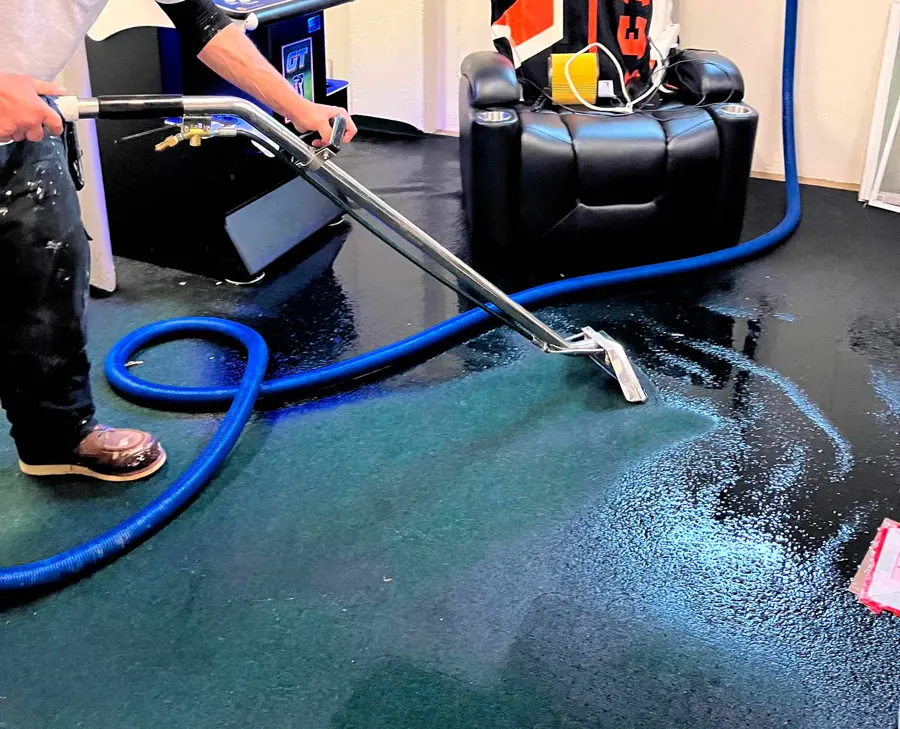
Extraction is the first job on most wet floors in Azusa, and it sets the pace for everything after it. A pump or extractor pulls water out of carpet, pad and hard flooring while the crew reads moisture in the surrounding walls. Water left behind turns into a long structural drying job, so removal comes before any equipment is set.
What extraction covers in an Azusa home
A typical extraction visit in Azusa covers several of these tasks:
- Pumping standing water off tile, laminate and concrete floors
- Pressing water out of carpet and pad with a weighted wand
- Lifting pad that holds water, and saving carpet that can be dried
- Reading baseboards, cabinet bases and lower drywall with a moisture meter
- Pulling muddy or gray water out before it settles into materials
Why foothill storm water changes the job
Storm water in Azusa often carries mud with it. Los Angeles Times photos from February 27, 2014 show floodwater and flowing mud on Ridge View Drive, a reminder that foothill runoff reaches homes as water and sediment together. Mud is shoveled and scooped before the wand starts, since silt clogs pumps and settles into carpet backing. Gray and storm water also change what can be saved: porous materials that sat in dirty water usually come out instead of drying in place.
Apartments, condos and shared floors
About 5,160 Azusa homes sit in buildings with two or more units, so water pulled from one floor may have come from a neighbor, or may be heading to one. Extraction in these buildings starts by tracing where the water entered and where it traveled, then pulling it from every unit that holds it. Notes and photos of each space go into the file, which helps when a property manager or an insurer asks how far the water went. Leaks that start overhead are covered under ceiling leak water damage.