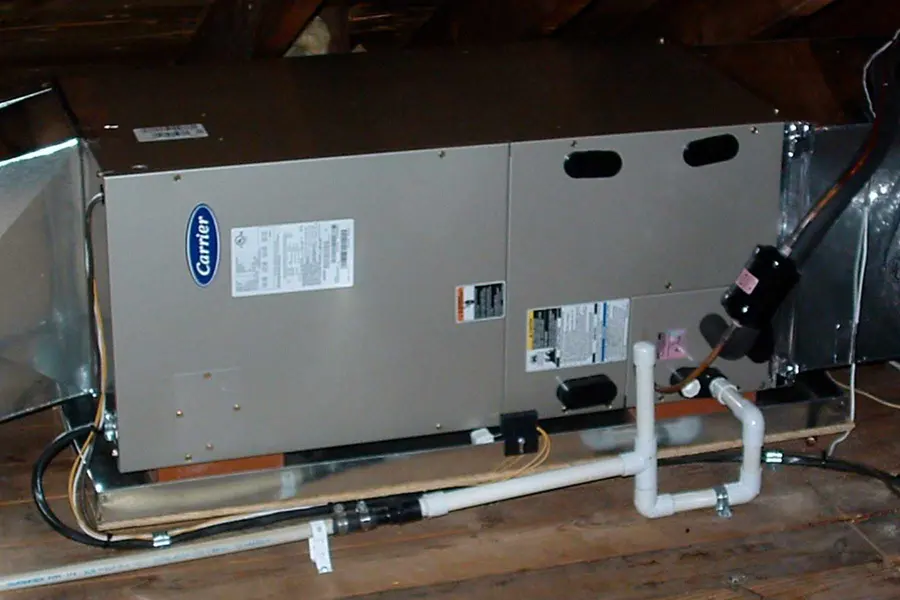
Air conditioners pull moisture from indoor air, and that water is meant to leave through a small drain. When the drain clogs or the pan cracks, the water has nowhere to go but the attic floor, the ceiling below and the walls. Because the flow is slow, the damage is often discovered as a stain, a drip or a musty smell instead of a puddle.
Where the water usually ends up
Azusa homes differ, but condensate water tends to follow the same routes:
- Onto attic insulation, which holds it against the ceiling
- Through ceiling drywall as a brown stain or sag
- Down into a wall cavity beside the air handler
- Into closet carpet when the unit sits in a hall closet
- Onto the unit below in a multi unit building
Detached homes and shared buildings
Azusa counts 7,418 detached single-family homes and 2,323 attached single-family homes, along with about 5,160 homes in buildings of two or more units. In a detached house the air handler often sits in the attic or a closet, while in a stacked building one clogged drain can reach the ceiling of the unit below.
Drying after the drain is cleared
An AC technician clears the drain and tests the pan, and the water damage crew handles the wet side. Insulation that has soaked is removed, ceiling sections that read wet are opened, and air movers run in the attic with a dehumidifier below. The same readings steer ceiling leak water damage and structural drying work.