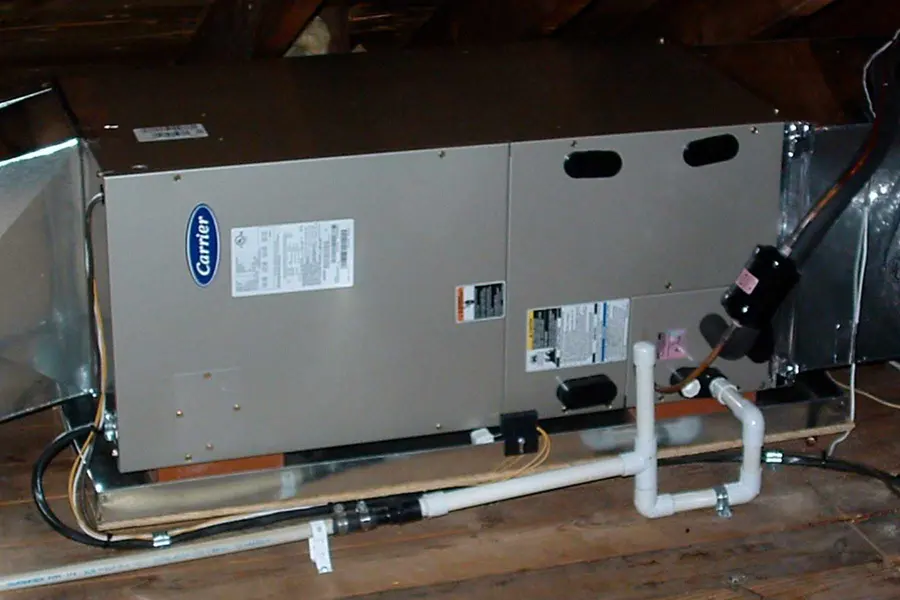
An air conditioner pulls water out of the air, and that water is meant to leave through a small drain. When the drain clogs, the pan under the air handler fills and spills into insulation, framing and the ceiling beneath it. The leak is slow, so the damage is often well advanced when the first stain appears.
Why summer is the busy season in Covina
Covina has a hot-summer Mediterranean climate, and Weatherbase lists the average July high at 89 F, so cooling systems work most of the day. Longer run times mean more condensate and more chances for a drain to clog with debris or algae. In the 5,695 homes that sit in buildings with two or more units, the drip can land in a neighbor's ceiling rather than your own.
Signs to check
- A water stain near a hallway or closet ceiling
- Water in the secondary pan under the air handler
- A system that shuts off by itself in hot weather
- Damp, matted attic insulation under the unit
- A gurgling sound or standing water at the drain outlet
What the cleanup includes
Crews remove insulation that is wet, open the ceiling section that sagged, and dry the attic and the rooms below with air movers and a dehumidifier. An HVAC technician clears the drain and checks the pan and safety switch so the leak does not repeat. Ceiling leak water damage explains how a wet ceiling is drained and dried, and structural drying covers the equipment.