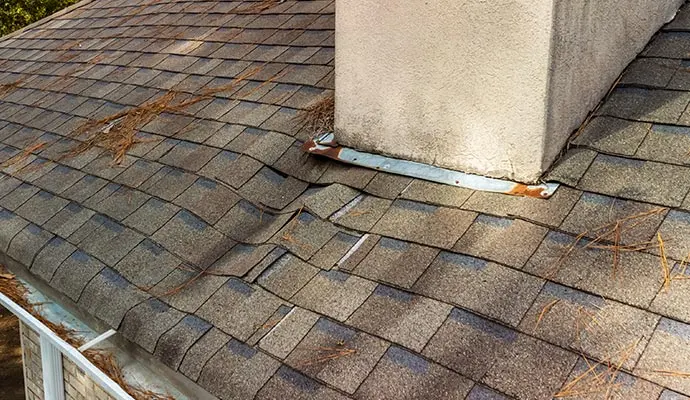
A roof leak rarely announces itself. Rain gets under a shingle, a seam or a flashing joint, soaks the insulation and drips onto the ceiling long before a stain appears. By the time a room shows damage, the attic has usually been wet for several storms, which makes finding the full extent the first task.
Winter storms and foothill homes
Rain in Azusa comes in winter storms, and these points follow from that:
- Leaks often show up only after a heavy winter storm
- Late February 2014 storms led Azusa and Glendora to issue mudslide evacuation orders
- Heavy rain exposes worn flashing, open seams and loose roofing
- Wind driven rain can push water under lifted shingles and flashing
- Attic insulation hides the wet area until the ceiling stains
Who fixes what after a roof leak
The roof itself belongs to a roofer, who finds the opening and repairs it. The restoration crew handles the water side: draining the ceiling so it cannot burst open, cutting out saturated drywall and insulation, and drying the attic framing, ceiling joists and walls below. Opening the ceiling early is often the safer choice, since a bulging section can release a lot of dirty water at once.
Drying the attic and the rooms below
Attic drying uses air movers and dehumidifiers placed where the wet insulation was, and the readings are checked at each visit until the framing is dry. Rooms below get their own setup, covered under ceiling leak water damage, and the whole job follows the same structural drying plan used for any wet structure. Photos taken before and after tear out support the claim.