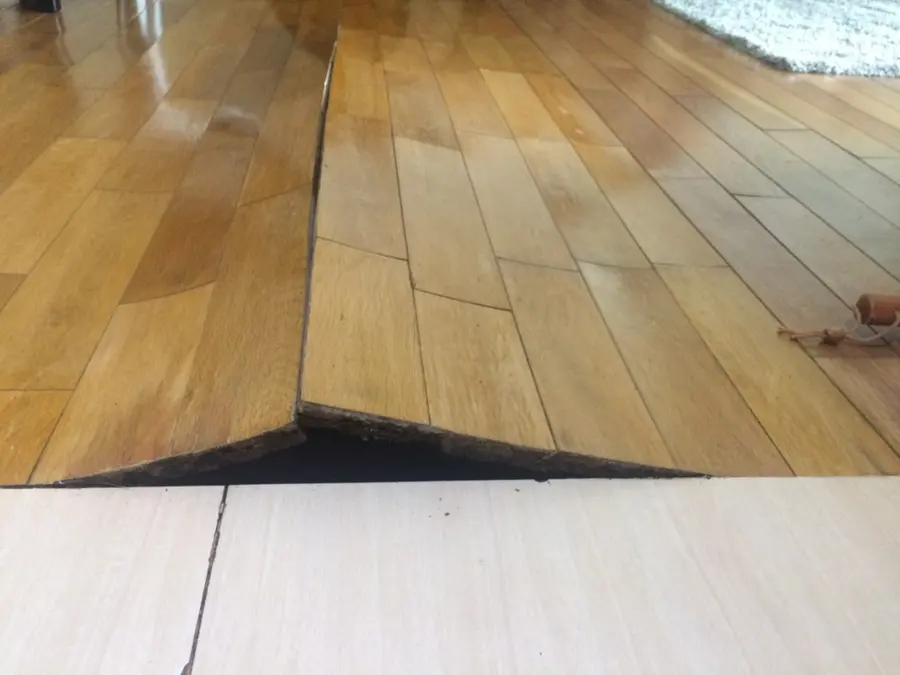
Hardwood is a natural sponge. Water enters through the seams, edges and underside, and the boards swell wider than the room allows. Cupping, where the edges rise, shows first, and crowning or buckling follows if the wood stays wet. The method decides the outcome: moisture has to leave the wood and the subfloor, not just the surface.
Cupping, crowning and buckling
The shape of the damage tells the crew what is happening below:
- Cupping: board edges rise higher than the centers
- Crowning: centers rise after a cupped floor is sanded too soon
- Buckling: boards lift off the subfloor, often in a ridge
- Gapping: boards shrink apart once the wood dries out
- Staining: dark marks that show water reached the finish
Saving a floor or taking it out
A floor that is cupped but not yet buckled can often be dried in place. Floor drying panels, or mats, pull moisture up through the boards while dehumidifiers keep the air dry, and meters on the boards and subfloor show progress. Boards that have lifted off the nails, or that sat in dirty water, are removed instead, and the subfloor is dried before any new flooring goes down.
Water sources and the next step
Hardwood is commonly hurt by a leak under a kitchen or bath, an appliance, a roof or ceiling leak, or storm water at a door. Each source is handled on its own page, such as appliance leak water damage or water extraction, and the floor is then dried to the standard in structural drying. A flooring contractor handles sanding, refinishing or replacement after the readings are dry.