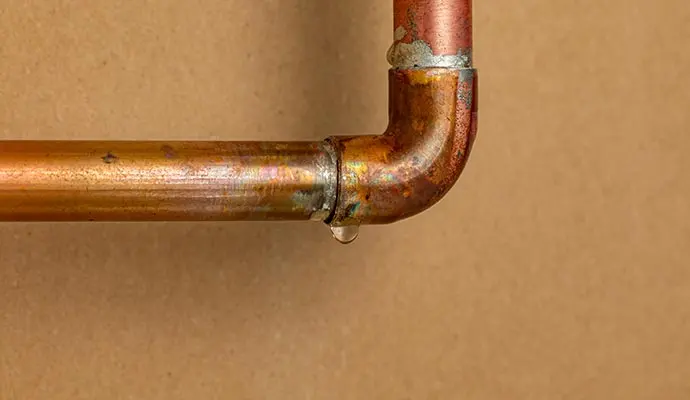
A burst pipe sends water through the cavity it sits in, then into the ceiling below or the floor around it. The visible puddle is only part of the loss. Wet insulation and drywall are usually the bigger problem, and they stay wet unless they are opened or dried with equipment.
What to do before help reaches the house
These moves limit the spread and protect the claim:
- Close the fixture shutoff, or the main valve if the source is unknown
- Open a faucet at the lowest point to drain the pipes
- Switch off power to rooms where water is falling
- Photograph the break, the wet areas and the water meter
- Move furniture and electronics out of the drip zone
The City notice and your water provider
The City of Covina Water Division page posted a Level 2 Water Supply Shortage effective August 4, 2022, with mandatory conservation measures for City water customers. Under them, plumbing leaks and breaks are to be repaired within 48 hours of notification by the City, and the problem area is to be isolated and turned off whenever possible until a permanent repair. That notice is dated, may have changed, and covers only City customers; four other providers serve parts of Covina.
How burst pipe damage is dried
Once the water is off, crews extract what is standing, then cut back wet drywall and pull insulation that has soaked through. Cavities are dried with targeted air, and low grain refrigerant dehumidifiers pull the moisture from the room. Ceilings below a break are checked with a thermal camera before they sag, and ceiling leak water damage explains that stage. The plumber repairs the pipe, and structural drying keeps going until the readings match dry reference walls.