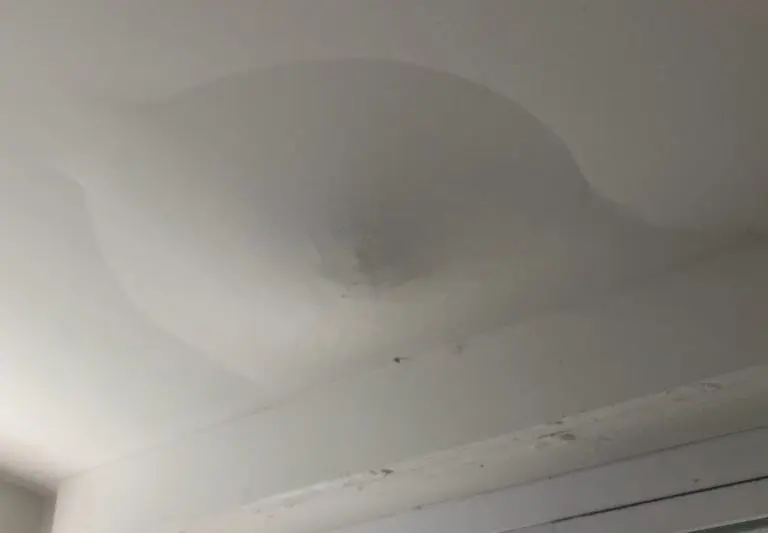
Ceilings hold water until the paper face gives way, which is why a small stain can turn into a sudden sag. The safe way to deal with it is to drain the water on purpose, then open the ceiling far enough to see which drywall and insulation actually got wet.
Why Covina ceilings often leak from above
A total of 5,695 Covina homes sit in buildings with two or more units, including 1,115 in buildings of 50 or more units. In those buildings, a ceiling stain frequently begins with a leak in the unit above, such as a supply pipe, a tub drain or an appliance. That changes the first call: the property manager needs to know right away so the source can be found and shut off, and the unit above may need drying too.
Winter rain adds roof-driven stains
February is Covina's wettest month at 4.66 inches, and rain that finds a gap in the roof lands on the top floor ceiling first. Stains that appear only after storms point to the roof, while stains that appear in dry weather point to plumbing. Both are treated the same way once the ceiling is open, and roof leak water damage covers the roof side.
How a wet ceiling is dried
- A small drain hole releases pooled water into a bucket
- Wet drywall is cut back until the edges read dry
- Wet insulation in the joist bay is bagged and removed
- The floor above is checked when the source was upstairs
- Air movers and a dehumidifier run until readings match dry
The equipment side is explained under structural drying.