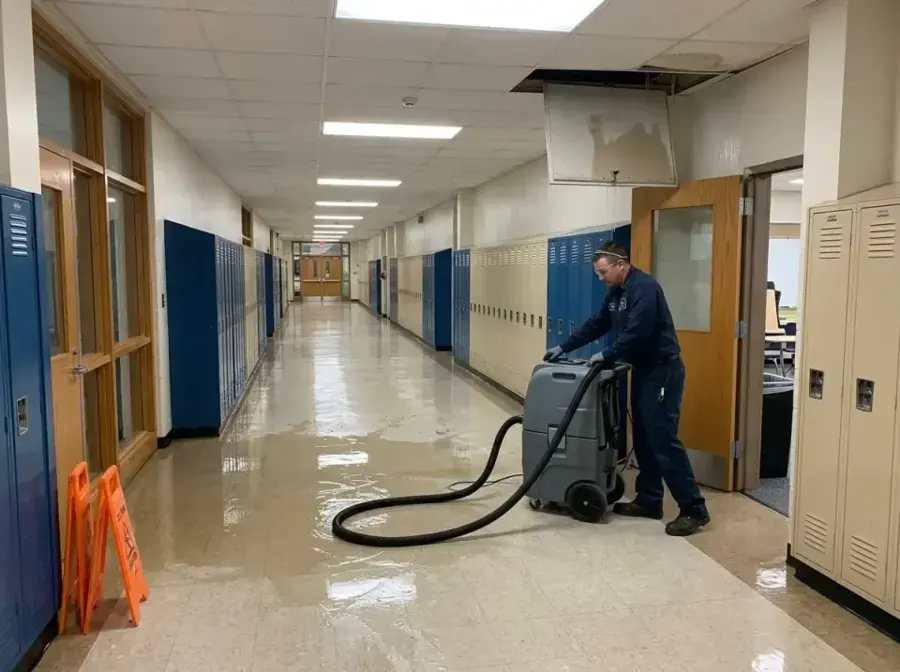
A commercial loss is a scheduling problem as much as a water problem. Tenants, students and customers still need space, so drying is planned in phases, wet areas are contained, and managers get daily numbers that show when each zone can reopen.
San Dimas building types
San Dimas holds a varied mix of buildings that can take on water, from Raging Waters Los Angeles at Frank G. Bonelli Regional Park to Bonita Unified School District campuses, Life Pacific University and the Pacific Railroad Museum in the former ATSF San Dimas Depot on Bonita Avenue. Classrooms, public halls, shops and apartments each call for a different plan.
How a phased plan works
Most commercial jobs follow this order:
- Contain the wet zone so the rest of the space can stay in use.
- Extract and tear out in the order that reopens areas fastest.
- Set equipment zone by zone, with temporary power where needed.
- Report readings daily so managers can schedule reopening.
Working with managers and tenants
Water losses in shared buildings involve more than one party. The crew documents each affected suite or room separately, keeps readings per space and gives the property manager one file that covers the whole job. Schools and public buildings often add scheduling limits, which are worked into the phase plan before equipment goes in. Smaller storefronts can follow structural drying on its own, and tenant spaces above are handled as ceiling leak water damage.