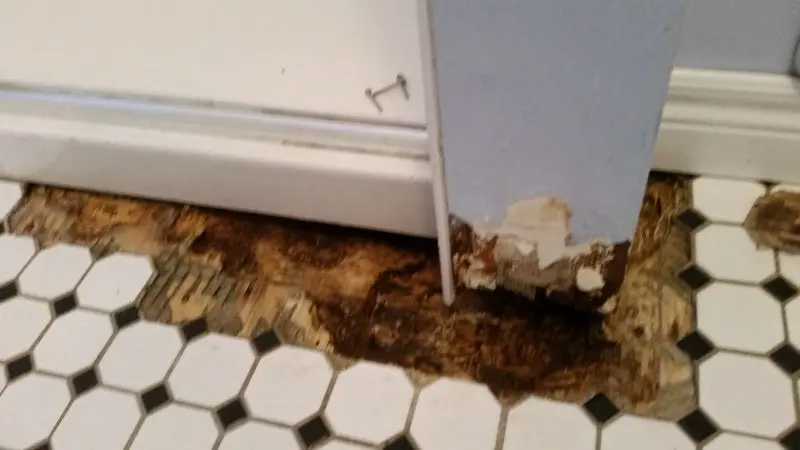
Shower leaks are slow. A cracked pan, a loose drain flange or failed caulk lets a little water out with every use, and it soaks the subfloor and wall bottoms for weeks or months. By the time tile loosens or a ceiling stains below, the damage has spread through the framing.
Shared buildings and the unit below
Covina has 5,695 homes in buildings with two or more units, including 1,115 in buildings of 50 or more units. A shower pan or drain leak on an upper floor can reach the ceiling of the unit below, which makes it a two-unit problem. The upper unit needs the leak stopped and dried, and the lower unit needs its ceiling checked, so the property manager should hear about it right away.
How a bathroom leak is traced
- A meter maps moisture in the floor, wall bottoms and ceiling below
- Tile and the shower base come up only where readings call for it
- Rotted or swollen subfloor is cut out back to solid material
- Joists and wall studs are dried with targeted air
- The drain and pan are tested so the leak is not hidden again
Drying before rebuilding
Rebuilding over damp framing locks moisture in, so drying comes before any new subfloor, waterproofing or tile. Air movers and a dehumidifier run on the opened floor and wall until the readings match dry reference material. A plumber or tile contractor handles the repair of the pan or drain itself. See ceiling leak water damage when the water reached the ceiling below, and structural drying for the equipment.