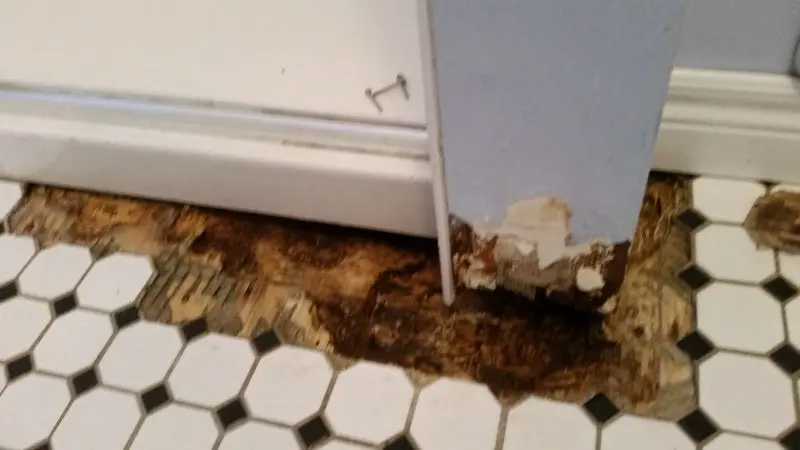
Shower leaks are slow and hidden. Water works through failing grout, a worn pan or a leaking valve body, then soaks the subfloor under the tile. By the time a stain shows on the ceiling below, the wood underneath may have been wet for months.
Shared floors and older bathrooms
Roughly 2,439 San Dimas homes share a building with other units, which means a shower leak can drip into the home below. About 7,826 of the city's 12,370 homes predate 1980, a reason to inspect bathrooms that have seen long service, though age alone proves nothing about a given bathroom. Moisture readings in both spaces keep the record straight for the owner, the neighbor and the manager.
Where shower water hides
Moisture mapping looks at these places:
- Under the shower base and around the drain flange.
- Behind the tile wall at the valve and the niche.
- In the subfloor and joists outside the shower door.
- Along the ceiling of the room or unit below.
What drying involves
Tile and drywall that stayed wet are opened so the subfloor and framing can be read directly. Rotted wood is cut out and flagged for a carpenter, while sound framing is dried with air movers and a dehumidifier. The ceiling below is opened if it holds water, and a plumber or tile setter repairs the leak once the structure is dry. A ceiling that has already stained is described under ceiling leak water damage, and failed supply plumbing under burst pipe water damage.