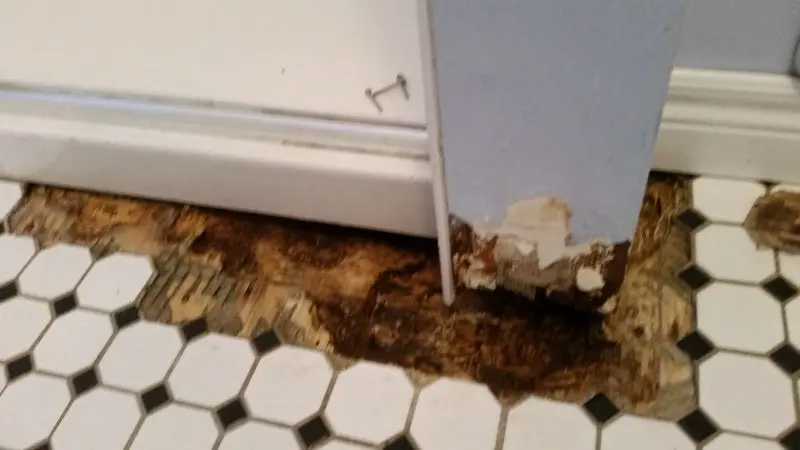
A shower leak can run for a long time without a visible sign. Water escapes through a cracked pan, a loose drain, a worn valve or open grout and soaks the subfloor under the tile. Rot, soft flooring and stains on the ceiling below are usually the first clues, which means the damage has already traveled.
Homes of every age
Azusa's homes range from the 3,412 built in the 1950s to the 1,415 built from 2010 to 2019, and the median home dates to 1970. Showers in that mix are built differently, so the first step is learning how this one is made: tile over a pan, a prefab base or a tub surround.
What opening the bathroom involves
Opening a leaking shower usually follows a short list of removals:
- Tile and backer board that read wet are cut out
- Soft or stained subfloor is removed back to solid wood
- Joists and framing are dried in place when they test sound
- Wall bottoms beside the shower are opened for readings
- The pan or drain is repaired by a plumber or tile setter
Ceilings and rooms below
A bathroom upstairs sits over a ceiling, and a slow shower leak can stain it long before the tile moves. The ceiling is read with a meter and opened only where it is wet, as covered under ceiling leak water damage. The bathroom itself is dried with air movers and a dehumidifier following the structural drying plan, and a rebuild comes after the readings are dry.