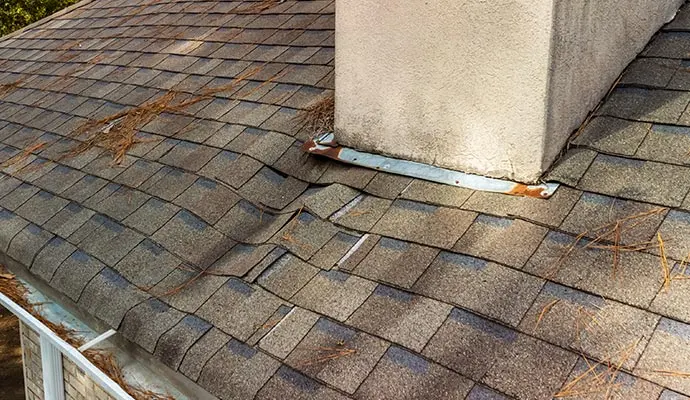
A roof leak rarely shows where the roof fails. Water runs along rafters and sheathing, soaks the insulation and then appears as a stain or a sagging ceiling somewhere else. By the time it is visible, the attic and the walls beneath may already hold a lot of moisture.
Signs of a roof leak after a storm
Look for these after rain, then photograph what is found:
- A brown ring or stain spreading on the ceiling
- Ceiling paint bubbling or drywall sagging in place
- Drips or a musty smell coming from the attic
- Damp insulation or dark wood around roof penetrations
- Water marks on walls near the top of the room
Winter storms and the Duarte foothills
Duarte's rain comes in winter storms, and the atmospheric river storm of February 17, 2017 shows how much water a single system can bring. Hillside homes near the Fish Fire burn area, such as those along Mel Canyon Road, take the same storms as the rest of the city, with the added chance of runoff and mud at street level. The source of a leak is found by inspection, not assumed.
What the drying crew does after a leak
The crew starts in the room below, where a bulging ceiling is drained through a small hole before it can drop. Then comes an attic visit to remove wet insulation and check the sheathing and rafters with a moisture meter. Air movers and dehumidifiers dry the cavity and the room while a roofer repairs the roof so the next storm cannot wet the area again. Each step is logged for the claim, as on every Duarte water damage restoration job, and the same steps apply to any ceiling leak.