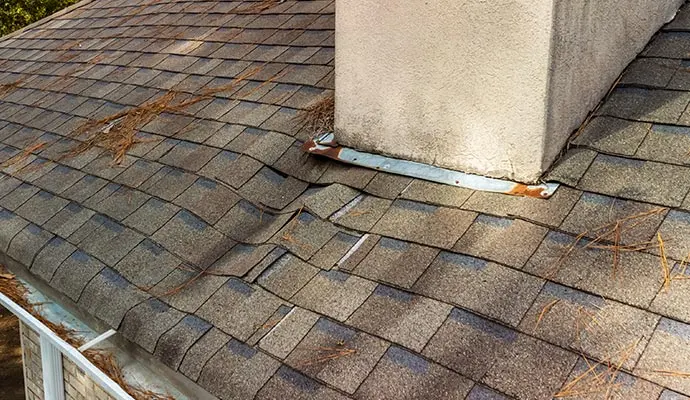
A roof leak rarely shows up where the water came in. It runs along rafters and drips onto insulation, then spreads across the ceiling until a stain or a sag appears in a room. By that point the attic side of the drywall is usually soaked, and that is where drying has to start.
How the winter rain pattern plays out
Covina averages about 18 inches of rain a year, according to Weatherbase climate data, falling mostly from December through March. February is the wettest month at 4.66 inches, followed by January at 3.68 and March at 3.00. On May 22, 2008, fast-moving thunderstorms dropped heavy rain on parts of the San Gabriel Valley. After dry months, the first heavy storm tests every weak spot on a roof at once, and that is when hidden gaps start to show.
What gets opened and what gets dried
- Sagging ceiling sections are drained through a small hole first
- Wet drywall and soaked insulation come out in the affected area
- A thermal camera checks the neighboring ceiling bays
- Attic framing and the rooms below are dried with air movers
- Daily readings decide when the equipment can leave
Roof repair and drying go together
The roofer has to close the entry point or the next storm repeats the damage, so the order matters. Drying equipment can run while the roof is being fixed, and a tarp is a common short-term step. Photos of the roof area, the stain and the opened ceiling help the claim file. For damage that has spread through a ceiling, see ceiling leak water damage, and for the equipment itself, structural drying.