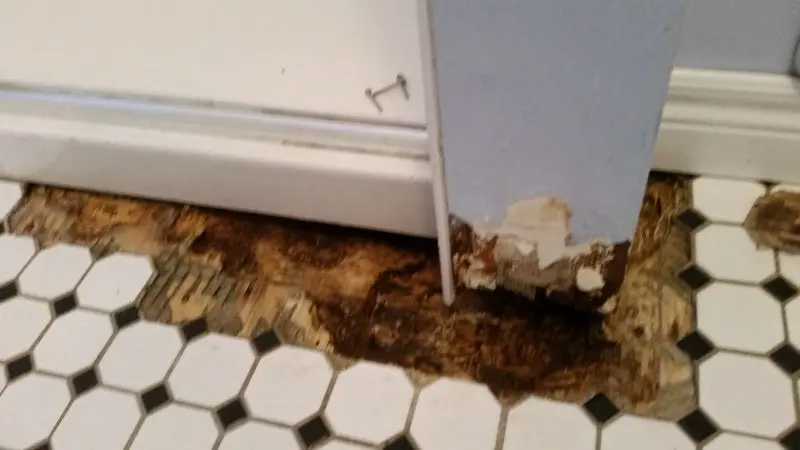
Shower leaks often run for months because the water stays hidden under tile, behind a wall or inside a pan. By the time grout cracks, tile loosens or a ceiling below stains, the subfloor and framing may be soft, and drying has to reach materials that no one can see.
Signs a shower or tub is leaking
Watch for these before the damage reaches the framing:
- Grout that crumbles or tile that rocks underfoot
- A bathroom floor that feels soft near the tub
- Paint peeling or stains on the wall behind the shower
- A ceiling stain in the room underneath
Older Duarte homes and bathroom leaks
Duarte has 1,215 homes from the 1940s and 1,836 from the 1950s, and bathrooms in homes with that much use may have been remodeled, patched or left alone for decades. Whatever the age, every job starts with readings rather than assumptions about what failed. A moisture map of the floor, the wall and the ceiling below shows how far a shower leak has traveled.
How a leaking shower area gets dried
Crews pull baseboards, lift the flooring just outside the bathroom and open the wall bottoms or the ceiling below where readings stay high. Soft subfloor is cut out, while framing and joists that are only damp are dried in place with air movers, panels and a dehumidifier. The pan, drain or valve is repaired by a plumber or tile setter, and the same steps apply to a toilet overflow that soaked the floor. Each result is logged as in all Duarte water damage restoration work.