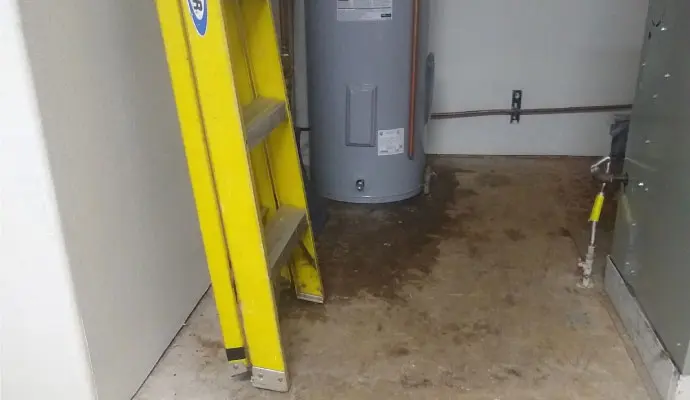
A water heater can fail slowly through a rusted tank or fitting, or all at once when a tank splits. Either way the water spreads across the floor, soaks baseboards and wicks into the bottoms of nearby walls, so a small puddle in the closet can mean damp drywall in the hallway next to it. Heater leaks are often discovered late because the closet door stays closed.
What a water heater leak cleanup includes
A typical visit covers the following, in this order, and the order shifts when carpet or hardwood is involved:
- Water extracted from the floor and low corners
- Baseboards removed to expose wall bottoms
- Lower drywall opened where readings stay high
- Flooring and pad checked for trapped water
- Air movers and a dehumidifier set up to dry the area
Plumbing permits and heater replacement
A leaking heater usually ends in a repair or replacement. The City of Duarte's Community Development FAQ says a plumbing permit is required to install, alter, remove or repair plumbing, water piping and gas piping, so ask the city what a particular heater swap needs before work begins. Drying can start in the meantime, because wet drywall and flooring should not wait for the plumber's schedule.
Dry the closet, the wall and the floor beyond
Water heater leaks tend to travel along the floor until they meet a wall, a doorway or a drain. Crews follow that path with a moisture meter, checking the wall on the far side, the carpet or flooring in the next room and the cabinet bases nearby. Hardwood or laminate beside the closet needs the closest attention, because boards swell and cup when wet. If the leak ran for days, structural drying and daily logs keep the whole path honest, and the same steps apply when an appliance leak wets the laundry room.