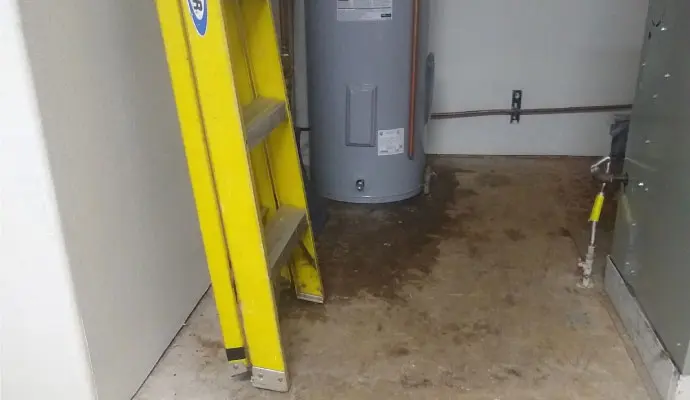
A water heater leak looks small until the floor is checked. The tank sits in a garage, closet or utility room, so the water often runs under the wall plate and into baseboards, carpet pad and cabinets next door before anyone sees it. The crew starts by extracting the water, then reads the surrounding materials to find where it traveled.
Shutting the water off first
These points matter in the first moments of a heater leak:
- Close the cold supply valve above the heater
- Switch off the power or gas control to the heater
- Azusa Light & Water Rule 14 puts a shutoff valve near the meter as a backup
- Drain the tank only after the supply is off
- Keep the old tank for the adjuster if it failed
Strapping and the city checklist
The Building Division's accessory dwelling unit checklist in Azusa says a water heater must be strapped to the wall, which helps keep the tank from shifting. A strapped tank can still fail from a rusted bottom or a worn valve, and the cleanup is the same either way: water out, wall bottoms checked and floors dried. Replacing the heater is a plumber's job.
Where the water goes and how it dries
A tank in a garage sends water across the garage floor and under the door into the house, while a closet unit pushes it into carpet and the wall behind. Extraction comes first, then moisture meters check baseboards, lower drywall and flooring in each direction. Air movers and a dehumidifier then dry the floor, and the water extraction and structural drying pages show how those two stages work.