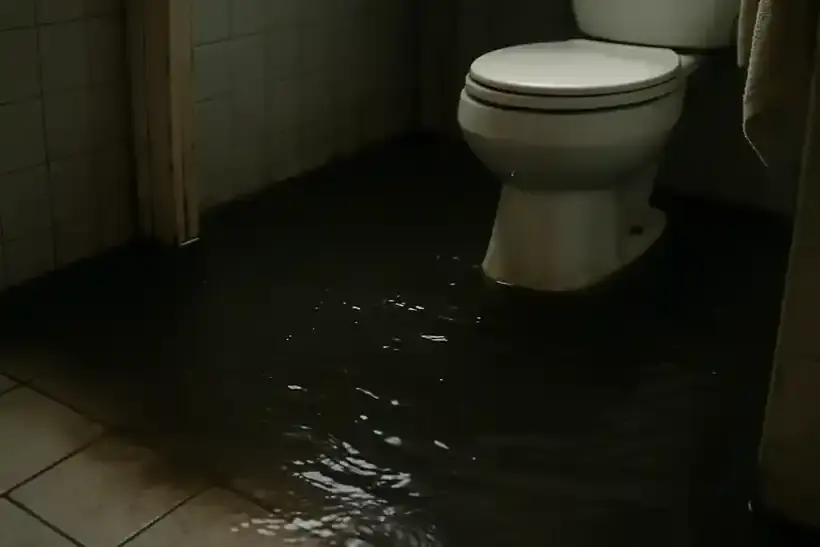
Sewage is not a leak to dry and forget. It carries bacteria and waste, so the crew contains the area, removes what soaked it up and sanitizes what stays before any drying equipment goes in. Rushing that order spreads the problem into rooms that were still clean.
Who handles what in La Verne
The City of La Verne's Sewer Division maintains and cleans the city sewer system. Wastewater is collected in city sewers and discharged to the La Verne Trunk Sewer, a regional trunk sewer owned by the County Sanitation Districts of Los Angeles County, and it ends at the Pomona Water Reclamation Plant.
A sewer overflow in the city system is reported to the Public Works Department. Clearing a blockage is a plumber's job or a call to the city, while the contaminated rooms inside the house are the restoration crew's work.
What cleanup involves
The work follows a fixed order:
- Containment with plastic sheeting and controlled airflow
- Protective equipment for every technician
- Soaked porous materials bagged and removed
- Hard surfaces cleaned and sanitized
- Drying with air scrubbers and daily readings
Why drying in place is not enough
Carpet, pad, insulation and lower drywall that touched sewage cannot be made clean by drying, so they are removed. The affected rooms stay sealed until readings are dry, and the photos and logs go into the insurance file. A bathroom that overflowed from a clogged toilet follows the same order, described under toilet overflow cleanup.
Until cleanup is finished, keep people and pets out of the affected rooms and do not run fans through them.