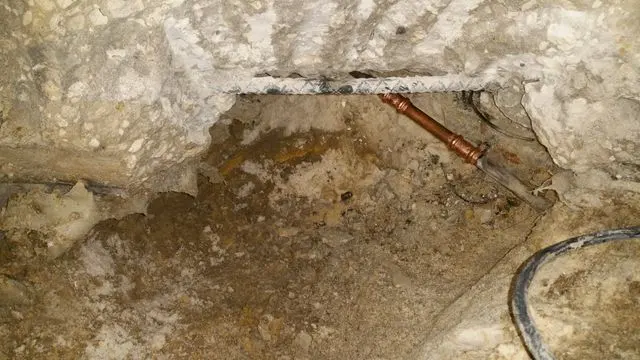
Where a La Verne house sits on a concrete slab, a leak in a pipe beneath it has nowhere to go but up. It soaks the underside of flooring, creeps into wall bottoms and cabinets, and can run for weeks before a damp spot shows on the surface.
Why the age of La Verne homes matters
The median La Verne home was built in 1976, 3,878 homes date from the 1970s and about 7,454 of La Verne's 12,020 homes were built before 1980. Age does not cause a leak by itself, but a home with decades of service has had more years of wear, movement and repairs.
Foundation types differ from house to house, so the first visit confirms what the floor is made of before a drying plan is set.
How a slab gets dried
Concrete holds water far longer than drywall, and a floor that looks dry can still be giving off moisture. Meters read the surface, then dehumidifiers and air movers pull the water out while readings are logged at every visit.
- Moisture mapped across the slab, walls and cabinets
- Wet flooring and pad lifted where readings stay high
- Wall bottoms opened if moisture has wicked upward
- Dehumidifiers and air movers run until slab readings fall
Who does what once the leak is found
A plumber locates and repairs the pipe, which can mean breaking into the floor. The crew handles the water that already reached the structure, and both visits go faster when moisture readings and photos are shared. Insurance policies differ on slab leaks, so the claim number and the coverage questions belong with the insurer early. The drying records then show how far the water traveled, and structural drying explains how that work is verified.