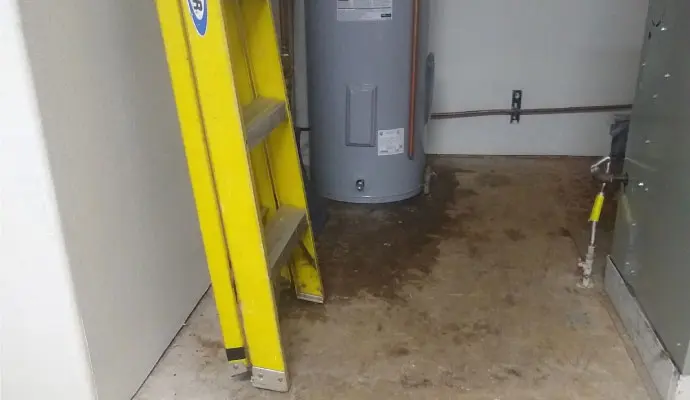
Tanks give out in two ways, a slow weep at a fitting or a sudden split in the shell, and either way a full tank holds a lot of water. In a garage or closet the water spreads fast, then heads for the nearest wall and the nearest carpet, so the cleanup is mostly a race against wicking.
Shutting it down safely
Turn off the cold supply to the heater, switch off the breaker for an electric unit and turn a gas unit's control to off. If the valve will not close, shut the home's main shutoff instead, because the first goal is to stop new water.
In La Verne, a shutoff valve the city places on the owner's side of the meter belongs to the owner, who maintains it and replaces it at the owner's expense, so know where that valve is before a tank fails.
Where the water goes
On a garage or closet floor, water spreads outward and soaks upward into baseboards and the bottom of the drywall. If the heater sits beside carpet or a finished room, pad and flooring take on water quickly. The crew extracts the water, pulls baseboards and dries the wall bottoms and the floor with readings at every visit.
- Carpet pad beside the closet
- Baseboards and the bottom of the drywall
- Cabinets or a laundry area nearby
- Flooring under vinyl or laminate
After the water is out
A plumber replaces or repairs the tank, and the crew dries what leaked. Keep the old unit's label and take photos of it before it is removed, because the insurer often asks about the unit's age and where it stood. Deeper moisture in walls is handled under structural drying, and a leak from another appliance follows appliance leak water damage.