Glendora · CAWater Damage Restoration
Slab leaks in San Dimas

Slab Leak Water Damage in San Dimas, CA

When a pipe leaks under a concrete floor, the water rises into flooring and walls with no puddle to point at. In San Dimas, the crew maps the moisture, dries the slab and takes out only what cannot recover.

(888) 578-6508Talk to a San Dimas crew about a slab leak
Concrete moisture mapped Slab and floor dried Flooring saved where possible
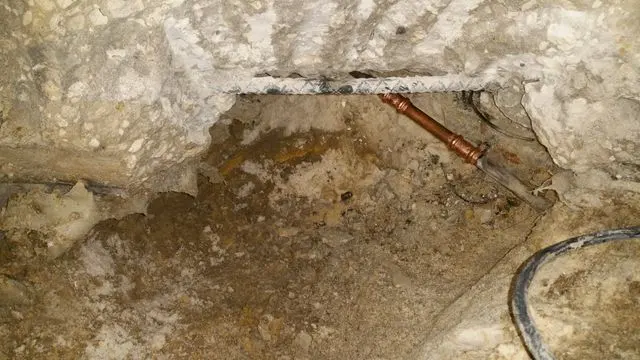
Copper pipe exposed in a broken-out section of a San Dimas concrete slab floor
Usual causeA pipe leaking beneath the concrete
Common signsWarm floor spots, damp carpet, hissing
Drying methodDehumidifiers, with desiccant for dense slabs
Local noteMedian San Dimas home built in 1976
Right now

First steps for slab leak water damage in San Dimas

  1. Check the water meter

    Turn off every fixture and watch the meter. If it still moves, the leak is live and a plumber is the next call.

  2. Shut the main valve

    Close the main valve to stop new water entering the slab, then open one faucet to relieve pressure.

  3. Protect the flooring

    Lift rugs and furniture off damp floors and photograph stains, lifting boards and damp patches before cleanup begins.

  4. Keep a path open

    Leave a route to the wet areas so moisture mapping and equipment setup can start without moving boxes first.

How this loss behaves
Usual causeA supply pipe leaking under or inside the concrete
First clueA warm floor spot or damp carpet with no puddle
Slowest to dryConcrete, tile setting bed and hardwood over the slab
Who fixes the pipeA plumber, after the leak is located
Typical cost ranges

What does slab leak water damage cost in San Dimas, CA?

Slab leak damage runs from $1,500 for one room of flooring to $18,000 or more when hardwood, cabinets and walls are involved. The slab itself is slow to dry, which stretches equipment time.

One room

$1,500 to $4,000
  • Slab and wall readings
  • Wet tile or carpet lifted
  • Daily slab checks

Several rooms

$4,000 to $9,000
  • Flooring out across rooms
  • Wall bases opened
  • LGR and desiccant units

Wide spread or hardwood

$9,000 to $18,000+
  • Hardwood or tile over most rooms
  • Cabinets and walls hit
  • Longer slab drying

Ranges are typical, not a quote. The water category, the square footage that got wet, the material class and how soon drying started move the number most. The water damage cost calculator gives a closer planning range.

The process

How slab leak water damage is handled in San Dimas

Moisture gets mapped before any equipment goes down, and the equipment stays until the readings say dry, not until the room looks dry.

  1. Map the slab

    A meter and a thermal camera trace the wet zones across the concrete, the lower walls and the flooring above it.

  2. Lift the wet flooring

    Carpet, pad and any tile or boards that cannot recover are removed so the concrete can release moisture.

  3. Dry the concrete

    Dehumidifiers and air movers run, with desiccant units for dense slabs, and readings are logged on every visit.

  4. Release on readings

    Equipment comes out only after the slab reads dry, and the numbers go into the file for the flooring contractor.

Rapid local response

Restoration crews dispatch 24/7 across San Dimas, because water keeps moving into subfloor, cabinets and drywall after dark.

IICRC S500 drying standard

The drying team works to IICRC S500: structural drying, not just surface drying, with readings logged daily.

Claim-ready documentation

A moisture map, psychrometric logs and timestamped photos build the file an adjuster reviews.

Foothill water know-how

Slab leaks, aging supply pipe, attic AC overflows and winter storm runoff are everyday work across the San Gabriel Valley foothills.

A slab leak is a supply pipe leaking under or inside concrete. The water has nowhere to go but up, so it shows first as a warm patch, a musty smell or flooring that lifts. A plumber finds and stops the leak, and the restoration crew then dries everything the water soaked.

Signs that point under the floor

These clues often appear before any water is visible:

  • A warm spot on the floor that is not near a vent or sunny window.
  • Carpet that stays damp or smells musty after the surface is dried.
  • Baseboards that swell or paint that bubbles low on the wall.
  • Tile or hardwood that lifts, cups or sounds hollow in one area.
  • A water meter that keeps moving when every fixture is off.

Why age matters in San Dimas

The median San Dimas home was built in 1976, and the 1970s is the city's biggest building decade with 3,983 homes. About 7,826 of 12,370 homes predate 1980. Age alone does not prove a leak, but plumbing that has served for decades is a fair reason to check the meter after any unexplained dampness.

How the drying works over concrete

Concrete holds water far longer than drywall does. Once the wet flooring is lifted, readings are taken on the slab and the lower walls, and refrigerant dehumidifiers run with air movers to draw moisture upward. Dense or sealed slabs can need desiccant units, and drying continues until the slab reads dry so new flooring does not trap what is left. Tile and hardwood laid over the slab are the hardest to save (see hardwood floor water damage), while carpet and pad are often lifted so the concrete can release its water. The equipment side is described under structural drying.

Photos of the exposed pipe, readings across the slab and a floor plan marked with wet zones go into the file, so the plumber's repair and the drying records tell one story.

Related

Related water damage services in San Dimas

Planning tools for the next step

Coverage

Slab leak water damage across San Dimas

Slab leak calls come from all of ZIP 91773, including Downtown San Dimas, Via Verde and the streets along San Dimas Avenue, and from county areas such as Charter Oak and Walnut Islands as well.

The same service nearby: slab leak water damage in Glendora, La Verne, Covina.

San Dimas, CA service area

Water damage restoration in San Dimas · every city covered

Questions

Slab Leak Water Damage questions in San Dimas, CA

How is a slab leak found?

A plumber uses pressure tests, acoustic listening and leak detection tools. Moisture mapping by the restoration crew then shows how far the water has spread.

Does every damp floor mean a slab leak?

No. Roof leaks, plumbing inside walls and appliance leaks can also dampen floors, which is why meter checks and moisture mapping come before conclusions.

Can hardwood over a slab be saved?

Sometimes, if it is caught early and dried with floor panels. Boards that cup or buckle usually come out, and the slab is dried before new flooring goes in.

Is every older San Dimas home at risk?

Age raises the odds of wear, and about 7,826 of 12,370 San Dimas homes predate 1980. But a slab leak needs plumbing in or under concrete, so each home is judged on its own.

How long does a slab take to dry?

Concrete dries slowly, often more slowly than the walls above it. The slab is called dry only when readings across it fall to normal, not after a set number of days.

Who handles the pipe repair?

A plumber repairs or reroutes the pipe. The restoration crew works alongside, so the slab can be dried and the records match what the plumber found.

24/7 water emergencies

Dry the slab before flooring goes back

Crews map the concrete, lift only what must go and dry the slab until it reads dry.

(888) 578-6508San Dimas slab drying help
Call (888) 578-6508 24/7