Glendora · CAWater Damage Restoration
La Verne water extraction

Water Extraction and Removal in La Verne, CA

Standing water keeps traveling into pad, baseboards and lower walls until it is pumped out. The crew removes it from La Verne homes and shops, checks the moisture left behind and builds the drying plan for every wet room.

(888) 578-6508Call about a soaked La Verne floor
Truck-mounted or portable units Soaked pad lifted Moisture checked afterward
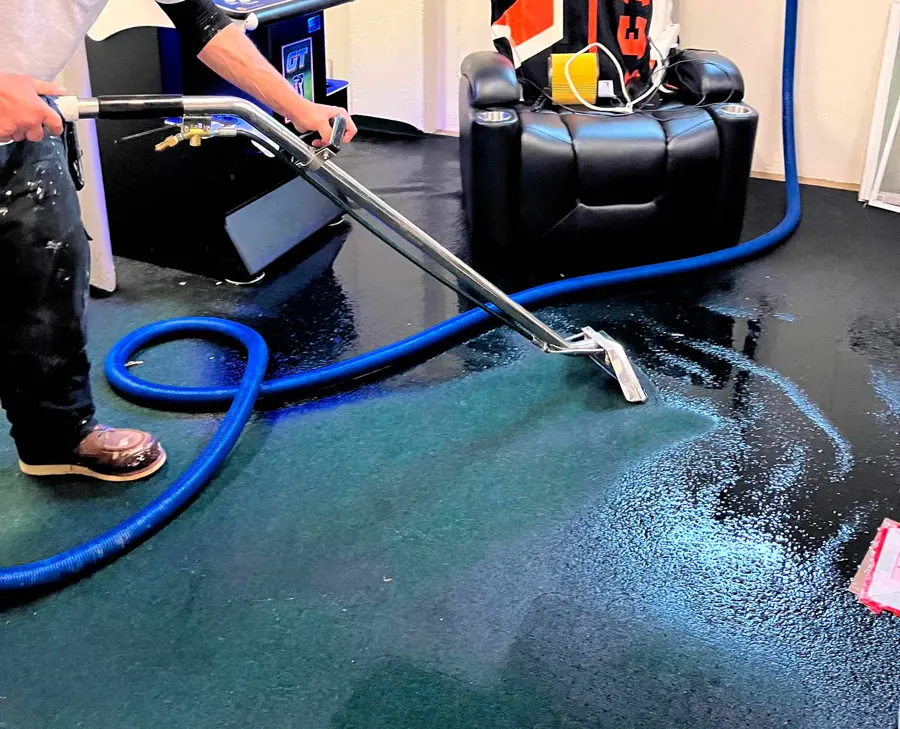
Extraction wand pulling water from soaked carpet, shown for La Verne water extraction
Best forStanding water on carpet, tile and wood
EquipmentTruck-mounted and portable extractors
Right afterMoisture mapping and a drying plan
Paper trailPhotos, readings and removal notes
Right now

First steps for water extraction and removal in La Verne

  1. Find and stop the source

    Close the fixture valve or switch off the appliance feeding the water, and keep out of rooms where water reaches outlets or the panel.

  2. Take the pictures first

    Photograph the water, the source and the damaged belongings before anything is moved or pumped out.

  3. Lift what can be lifted

    Raise small furniture, rugs and boxes onto dry surfaces, and leave heavy pieces for the crew.

  4. Skip the household vacuum

    A standard vacuum is not built for water and can shock the person holding it, so wait for proper extractors.

How this loss behaves
Usual causeA failed hose, tank or pipe, or runoff from a heavy storm.
First clueSquishy carpet or baseboards that feel cool and damp.
Often missedWater wicked behind baseboards and under cabinets.
Clock is runningPad and drywall start breaking down in a day or two.
Typical cost ranges

What does water extraction and removal cost in La Verne, CA?

One clean-water room usually runs $300 to $900. Several rooms run $900 to $2,500, and sewage or a flooded floor starts at $2,500 and climbs with the amount of cleanup needed.

A single room

$300 to $900
  • Truck-mounted or portable pump-out
  • Carpet pressed, soaked pad lifted
  • Moisture check of the room

Several rooms

$900 to $2,500
  • Hallway and neighboring rooms
  • Pad removed where needed
  • Moisture map for the plan

Category 3 or a full floor

$2,500 to $6,000+
  • Sewage or contaminated runoff
  • Carpet and pad hauled out
  • Antimicrobial before drying

Ranges are typical, not a quote. The water category, the square footage that got wet, the material class and how soon drying started move the number most. The water damage cost calculator gives a closer planning range.

The process

How water extraction and removal is handled in La Verne

Moisture gets mapped before any equipment goes down, and the equipment stays until the readings say dry, not until the room looks dry.

  1. Assess the water

    The crew finds the source and the water category, then checks flooring, baseboards and walls with a moisture meter.

  2. Remove the water

    Extractors pull the standing water, carpet is pressed or lifted, and pad that cannot be saved is cut out.

  3. Map what is left

    A thermal camera and meter readings mark every wet surface, so nothing hides behind a dry-looking wall.

  4. Hand off to drying

    Drying equipment goes in, with readings logged at each visit until every material meets its dry goal.

Rapid local response

Restoration crews dispatch 24/7 across La Verne, because water keeps moving into subfloor, cabinets and drywall after dark.

IICRC S500 drying standard

The drying team works to IICRC S500: structural drying, not just surface drying, with readings logged daily.

Claim-ready documentation

A moisture map, psychrometric logs and timestamped photos build the file an adjuster reviews.

Foothill water know-how

Slab leaks, aging supply pipe, attic AC overflows and winter storm runoff are everyday work across the San Gabriel Valley foothills.

A wet floor is only the visible part of the problem. Water moves sideways into baseboards and down into pad and subfloor, so pulling it out early decides how much of the room has to be replaced.

When pumping comes before anything else

Extraction leads the job when water is standing or when carpet and pad are saturated. A pump or wand removes the bulk, a weighted tool presses the carpet, and the pad comes out if it is soaked through or contaminated.

When only a thin film of water is present, the crew may skip heavy extraction and move straight to drying in place, which keeps more of the floor.

What happens after the water is out

Pumping is the start of the dry-out, not the end of it. A truck-mounted unit moves the most water, while portable units fit upstairs rooms, tight hallways and spaces a hose cannot reach. These steps follow:

  • A moisture meter checks the floor, baseboards and lower walls.
  • A thermal camera finds wet spots that look dry.
  • Wet pad and baseboards come off so air can reach the floor.
  • A drying plan sets equipment for every room that reads wet.

Extraction work in La Verne

Extraction here tends to follow one of two events: a plumbing or appliance failure inside a house, or a winter storm. The median La Verne home was built in 1976, so supply connections, drains and appliance hoses have had years of service. In the February 2024 storm, First Street was one of numerous La Verne streets with substantial flooding, and the National Weather Service recorded 9.5 inches of rain.

The first visit confirms whether the water is clean, gray or black, because that decides whether carpet can be dried or must be removed. Storm water that carries waste or debris is handled as storm runoff and flood cleanup, and drying continues under structural drying.

Related

Related water damage services in La Verne

Planning tools for the next step

Coverage

Water extraction and removal across La Verne

Extraction visits reach every part of ZIP 91750, from Old Town La Verne and Lordsburg to Hillcrest, Marshall Canyon and Live Oak, along D Street, Bonita Avenue and the Foothill Boulevard corridor, plus the streets around the University of La Verne.

The same service nearby: water extraction and removal in Glendora, San Dimas, Covina.

La Verne, CA service area

Water damage restoration in La Verne · every city covered

Questions

Water Extraction and Removal questions in La Verne, CA

How soon does water need to come out of carpet?

As early as possible. Pad and drywall begin to degrade within the first 24 to 48 hours, so extraction first and drying right after keeps more of the flooring in place.

Can carpet be saved after a pump-out?

Often, when the water was clean and extraction started early. The carpet is pressed and dried, while the pad usually has to be replaced. Carpet touched by sewage is removed instead.

What does truck-mounted extraction do that a shop vacuum cannot?

It moves far more water, much faster, and pulls from deep inside the pad. A shop vacuum leaves moisture behind that feeds the rest of the room.

Does extraction include the drying?

Extraction removes the water. Drying handles what the water left inside the materials and is planned from readings taken afterward. See structural drying.

Is extraction different after a storm?

Storm runoff can carry waste and debris, so it is treated as contaminated. Contaminated carpet and pad come out instead of being dried in place. See storm runoff and flood cleanup.

What should be photographed before pumping starts?

The source, the water level, the flooring and any damaged contents. Dated photos taken before extraction give the insurer a clear starting record.

24/7 water emergencies

Get the water out before it spreads

The crew removes the water, maps the moisture and sets the drying plan for every wet room.

(888) 578-6508Start the La Verne pump-out
Call (888) 578-6508 24/7