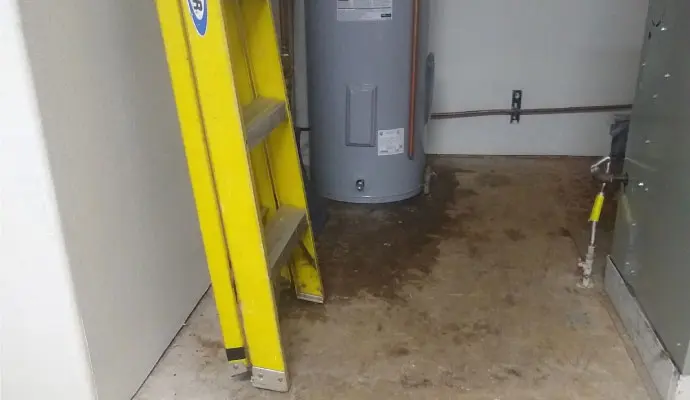
Many water heater leaks start small, with a weeping fitting or a rusted seam, and end with the tank emptying itself in one go. A water heater holds a large volume, and a failed tank sends all of it across the floor around it.
What the state requires of the heater
California Health and Safety Code section 19211 requires new and replacement water heaters, and existing residential water heaters, to be braced, anchored or strapped so they resist falling or horizontal movement in an earthquake. A strapped tank still leaks when it fails, so the bracing and the water cleanup are separate matters.
Hard water and tank wear
Golden State Water's 2025 sampling for the San Dimas System shows hardness averaging about 12 grains per gallon. Mineral-heavy water leaves scale and sediment inside tanks and on fittings over the years, which is a common reason a heater is replaced before it fails. A tank that is flushed and checked is less likely to surprise anyone.
Where the water goes
Water from a heater usually spreads in this order:
- Across the floor of the garage or closet.
- Under baseboards and into the lowest drywall.
- Into carpet, pad or flooring in adjoining rooms.
- Under cabinets or appliances next to the heater.
Extraction comes first because a heater floor can hold a lot of water. Baseboards are pulled so the wall bottoms can breathe, and drywall that wicked water upward is cut above the wet edge. Pad next to the heater is usually replaced, while sealed floors can often be dried in place. A neighboring washer leak is described under appliance leak water damage, and the equipment side sits under structural drying.