Glendora · CAWater Damage Restoration
San Dimas hardwood floors

Hardwood Floor Water Damage in San Dimas

Hardwood drinks water through its seams and swells long after the surface looks dry. The crew tests the boards and the subfloor, dries what can be saved with floor panels and removes what has cupped or buckled.

(888) 578-6508San Dimas wet hardwood help
Boards tested first Floor panels dry in place Subfloor read with a meter
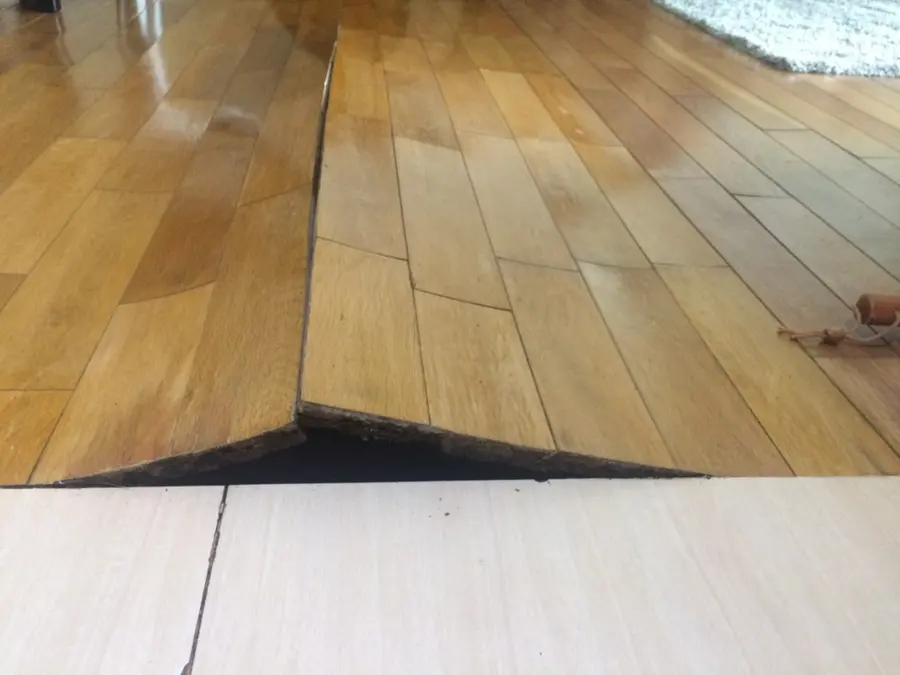
Hardwood boards buckled upward after soaking up water in San Dimas
Warning signsCupping, crowning, gaps, lifting boards
Dry in placeFloor panels, dehumidifiers, readings
Removal whenBoards buckle or water was contaminated
Also driedSubfloor or slab beneath the boards
Right now

First steps for hardwood floor water damage in San Dimas

  1. Stop more water

    Close the valve or stop the source, then blot standing water without grinding it into the boards.

  2. Lift furniture and rugs

    Move furniture off the floor and lift rugs, since trapped water keeps the wood wet and can stain it.

  3. Do not sand or seal

    Sanding or sealing a wet floor locks moisture in and makes cupping harder to correct.

  4. Photograph the floor

    Photograph the boards, the edges and any gaps before drying starts, so changes can be tracked.

How this loss behaves
Usual causeA leak, overflow or storm water
First clueEdges rising or boards lifting
Dry in place?Often, if the floor is caught early
Remove whenBoards buckle or water was contaminated
Typical cost ranges

What does hardwood floor water damage cost in San Dimas, CA?

Hardwood damage runs from $1,000 when one room can be dried in place to $15,000 or more when floors must be removed and the slab or subfloor dried. Buckled boards and contaminated water push a job into the top range.

One room, dried in place

$1,000 to $3,000
  • Water extracted, panels set
  • Subfloor readings each visit
  • Boards checked for cupping

Several rooms

$3,000 to $7,500
  • More panel setups
  • LGR dehumidifiers running
  • Baseboards pulled

Removal and subfloor drying

$7,500 to $15,000+
  • Buckled boards taken out
  • Subfloor dried before new wood
  • Complete job records

Ranges are typical, not a quote. The water category, the square footage that got wet, the material class and how soon drying started move the number most. The water damage cost calculator gives a closer planning range.

The process

How hardwood floor water damage is handled in San Dimas

Moisture gets mapped before any equipment goes down, and the equipment stays until the readings say dry, not until the room looks dry.

  1. Test the boards

    Meters read the boards, the subfloor and a dry reference board to decide what can be saved.

  2. Extract and set panels

    Standing water comes up first, then floor panels go down over wet boards with dehumidifiers running in the room.

  3. Log until stable

    Readings are taken on every visit and panels are reset as the wood gives up its moisture.

  4. Decide and document

    Boards that buckled or stay high are removed, and final readings and photos are recorded for the claim.

Rapid local response

Restoration crews dispatch 24/7 across San Dimas, because water keeps moving into subfloor, cabinets and drywall after dark.

IICRC S500 drying standard

The drying team works to IICRC S500: structural drying, not just surface drying, with readings logged daily.

Claim-ready documentation

A moisture map, psychrometric logs and timestamped photos build the file an adjuster reviews.

Foothill water know-how

Slab leaks, aging supply pipe, attic AC overflows and winter storm runoff are everyday work across the San Gabriel Valley foothills.

Wood absorbs water through every edge and seam, and it moves as it does. Boards swell, edges rise into cups and, in worse cases, whole sections buckle off the subfloor. Quick, controlled drying can pull some floors back; waiting often decides they cannot be saved.

Cupping, crowning and buckling

The shape of the damage tells the crew what to expect:

  • Cupping means the edges are higher than the center, from moisture below.
  • Crowning raises the center of each board, often after cupping has been sanded flat.
  • Buckling lifts boards off the subfloor and usually means removal.
  • Gaps and staining between boards point to long-term moisture.

Drying hardwood in place

Floor panels, also called mats, pull moisture up through the boards while dehumidifiers take it out of the air. Readings on the boards and the subfloor are logged on each visit, and drying stops only when the wood reaches its target. Moisture meters for wood read differently than meters for drywall, so the crew uses the right scale and compares the readings against an unaffected board in the same room. Sanding and refinishing come later, once the floor has settled flat.

When removal is the better call

Floors that buckled, boards soaked with contaminated water and sections that stay high after drying are removed so the subfloor can be dried directly. Replacing a damaged section is often better than fighting a floor that keeps moving. A leaking appliance or pipe under the floor is a separate repair; see appliance leak water damage and slab leak water damage.

Related

Related water damage services in San Dimas

Planning tools for the next step

Coverage

Hardwood floor water damage across San Dimas

Hardwood floor calls cover all of ZIP 91773, from Downtown San Dimas and Bonita Avenue to Via Verde and the streets along Foothill Boulevard, plus county areas such as West San Dimas, East San Dimas and Walnut Islands.

The same service nearby: hardwood floor water damage in Glendora, La Verne, Covina.

San Dimas, CA service area

Water damage restoration in San Dimas · every city covered

Questions

Hardwood Floor Water Damage questions in San Dimas, CA

Can cupped hardwood flatten again?

Often, if the moisture source is stopped and the floor is dried slowly. Many cupped floors relax as they dry, and sanding waits until readings are stable.

How is buckling different from cupping?

Cupping curls board edges. Buckling lifts boards off the subfloor, and it usually means those boards come out.

Do floor panels damage the wood?

No. Panels draw moisture upward through the boards, and the crew monitors the floor so it dries evenly instead of too fast.

Is engineered flooring handled the same way?

Similar steps apply, but engineered boards have layers that can separate, so they are tested early and are often removed sooner.

What if water got under the floor?

The subfloor or slab beneath is read with a meter, and drying continues until it is dry. Covering wet material with new boards would trap moisture.

When can the floor be refinished?

After the readings are stable at the target and the boards have settled flat. Refinishing earlier can seal moisture in.

24/7 water emergencies

Save the floor if it can be saved

Crews test, set panels and log readings until the wood and subfloor agree.

(888) 578-6508Request San Dimas hardwood drying
Call (888) 578-6508 24/7